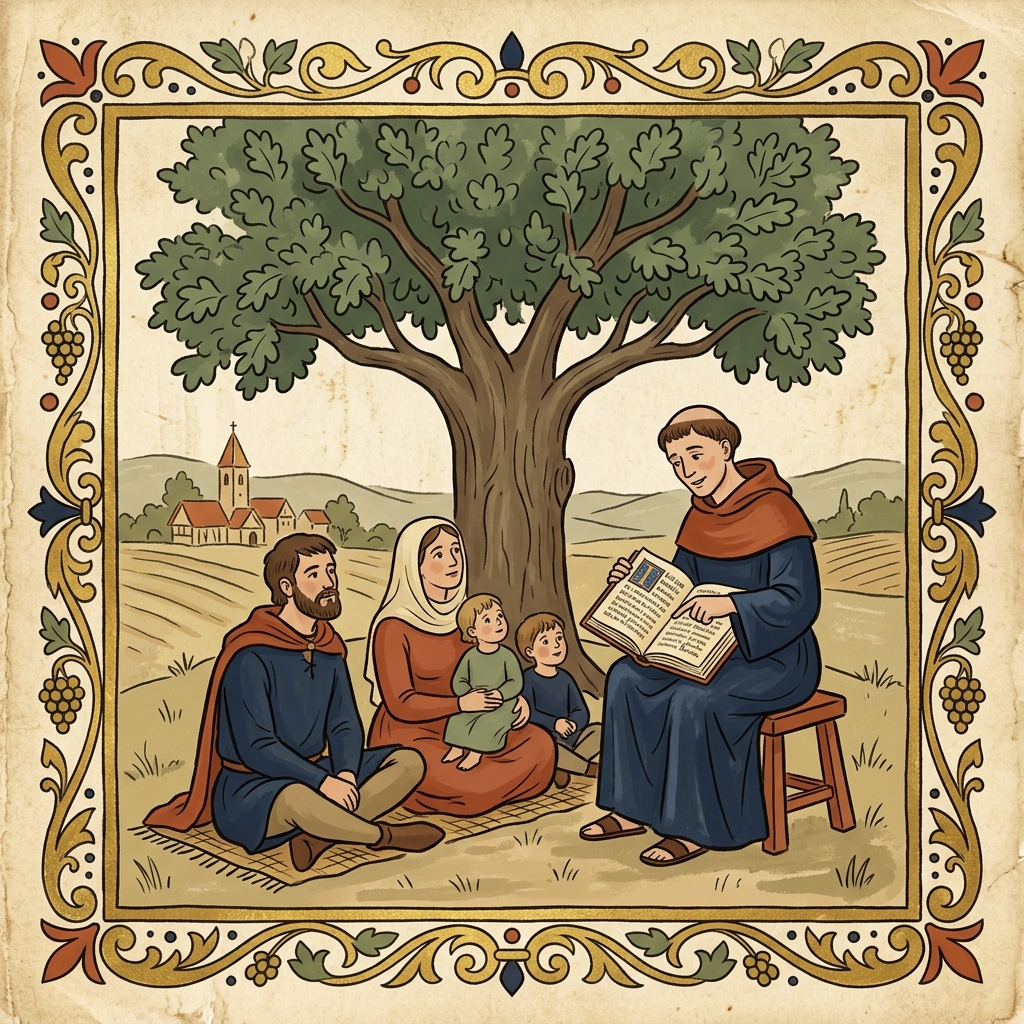
In the opening years of the thirteenth century, a profound shadow hung over the valleys of Languedoc. The Albigensian heresy, with its dark dualism that despaired of the goodness of God’s creation, had ensnared thousands of souls. Earthly rulers sought to suppress the error with the cold iron of the sword, yet hearts remained unyielding. It was into this spiritual wilderness that a humble Spanish canon journeyed, carrying neither army nor worldly splendor, but only the warm torch of divine truth and a heart inflamed by charity. His name was Dominic de Guzmán.
As we approach the feast of Saint Dominic on August 8th, the Church invites us to lift our eyes to this gentle giant of Catholic tradition. In an age marked by noise, ideological confusion, and spiritual fatigue, Saint Dominic stands as a beacon of clarity, reminding the faithful that truth is not an abstract weapon to conquer an opponent, but a living Person—Jesus Christ—to be loved, contemplated, and shared.
A Vision of Sacred Fire
Even before his birth in the rugged highlands of Caleruega, Spain, Saint Dominic’s divine destiny was foretold in sacred imagery. His mother, Blessed Jane of Aza, experienced a mystical vision during her pregnancy: she saw a hound leaping from her womb, bearing a burning torch in its mouth to set the whole world ablaze. This prophetic symbol—later immortalized in the Latin play on words Dominicanes (the hounds of the Lord)—prefigured a life consecrated to igniting human hearts with the fire of the Gospel.
Educated in the liberal arts and sacred theology at Palencia, young Dominic demonstrated an extraordinary capacity for both intellect and compassion. During a severe famine that devastated the region, he committed a deed that revealed the core of his sanctity: he sold his precious, hand-annotated parchment manuscripts—the greatest treasure a scholar of the Middle Ages could possess—to feed the starving poor. When questioned by his peers, he gave an answer that echoes down through the centuries:
blockquote>"I will not study upon dead skins, while living men die of hunger."Here lay the foundation of Dominican spirituality: learning is never an end unto itself, but a sacred instrument ordained to the salvation of souls and the relief of suffering humanity.
Preaching by the Light of Poverty and Truth
When Saint Dominic accompanied his bishop on a diplomatic mission through Southern France, he was deeply moved by the spiritual plight of those deceived by false doctrines. Where others saw enemies to be crushed, Dominic saw sheep without a shepherd. He observed that the heretics gained adherents largely because they appeared ascetical and devout, whereas some orthodox prelates traveled in grand luxury.
Under the guidance of the Holy Spirit, Dominic pioneered a revolutionary path. He established the Order of Preachers (commonly known as the Dominicans), founding a brotherhood that united rigorous intellectual formation with strict apostolic poverty. They walked barefoot from village to village, begging for their daily bread, meeting falsehood not with arrogance, but with profound humility, persuasive reason, and tireless prayer.
Centuries later, Saint Catherine of Siena, a tertiary of Dominic’s order, described his spirit with poetic splendor: "He took up the office of the cherubim... setting his sail to spread the word of God, scattering the darkness of error, and giving light." Dominic understood that to persuade the heart, one must first show radiant charity; to enlighten the mind, one must anchor oneself in Catholic truth—Veritas.
The Shield of Contemplation and the Holy Rosary
Yet, Dominic’s external preaching was merely the fruit of an intense, hidden prayer life. It was said of him by his early biographer, Blessed Jordan of Saxony, that Dominic possessed a remarkable grace: "He spoke only to God or of God." He spent his nights in the silence of the sanctuary, weeping over the sins of the world and pleading for those who had lost their way.
Pious tradition hands down to us the beloved account of the Blessed Virgin Mary appearing to Saint Dominic in the quiet solitude of the forest near Prouille. She bestowed upon him the Holy Rosary as a spiritual weapon—a sweet garden of contemplation wherein the faithful meditate upon the mysteries of Christ’s life, death, and resurrection alongside His Blessed Mother. Through this sacred devotion, Dominic found the spiritual power to soften the most hardened sinners and restore peace to torn communities.
Practical Lessons for the Modern Pilgrim
Though eight centuries separate us from the medieval cloisters of Saint Dominic, his holy example provides a luminous guide for our daily pilgrimage:
- Root Truth in Love: Defending the faith in our modern public square requires both clarity and sweetness. Like Saint Dominic, our words must be birthed in tears of compassion for those in error, rather than triumph in argument.
- Feed the Mind to Nourish the Soul: Dedicate time to the study of Sacred Scripture, the Catechism, and the rich tradition of the Church. A mind filled with divine light is better equipped to guide a searching world.
- Anchor the Day in Contemplative Prayer: Before we attempt to transform our families, workplaces, or culture, we must first allow the Holy Spirit to transform us in the quiet sanctuary of prayer, especially through the daily recitation of the Holy Rosary.
As we honor this great father of the Church, let us pray for a portion of his apostolic zeal, that our lives may likewise become glowing torches of faith, shedding light in a world hungry for truth.
Reflection Question
In your daily encounters with those who disagree with or do not know the Catholic faith, how might you better combine rigorous study of God's truth with Christlike gentleness and prayerful charity?