As the liturgical calendar turns its pages into the verdant heart of early June, the Church invites us to pause at the feast of a man whose life was cleaved in two by the sheer force of divine grace. Yesterday, on the sixth of June, we celebrated Saint Norbert of Xanten. To look upon the life of this twelfth-century titan is to behold a tapestry of medieval chivalry woven with the threads of apostolic zeal. He is a saint who speaks profound volumes to our modern age—an age that, much like his own, often slumbers in the gilded cradle of worldly comfort.
A Lightning Strike in the Dark
Before he was a reformer, a bishop, or a founder, Norbert was a creature of the court. Born into minor nobility in the late eleventh century, he was a secular cleric who enjoyed the benefices of the Church without bearing the weight of its cross. He walked the halls of power alongside Emperor Henry V, draping himself in fine silks and amusing himself with the fleeting pleasures of courtly life. The sacred mysteries of the altar were, to the young Norbert, merely the background music to his earthly ambitions.
But the Hound of Heaven is not easily outrun, nor is He deterred by silk. In the year 1115, while riding his horse toward a village in Westphalia, a sudden and violent thunderstorm blackened the sky. A deafening crack of thunder tore through the heavens, and a bolt of lightning struck the ground directly before his steed. Thrown into the mud and knocked unconscious, Norbert awoke with the dust of his pride in his mouth. Echoing the great Apostle to the Gentiles on the road to Damascus, he cried out into the howling wind: "Lord, what do you want me to do?"
The answer he received within his soul was drawn from the Psalmist: "Turn from evil and do good; seek peace and pursue it." In that muddy road, the courtier died, and the saint drew his first, gasping breath.
The Valley of Prémontré: A Cradle of Reform
Norbert did not merely amend his life; he cast it into the refiner’s fire. He shed his opulent garments, donned a coarse hairshirt, and retreated into a period of severe penance and solitary prayer. Ordained to the priesthood, he soon became a wandering preacher, walking barefoot through the snows of Europe to call souls to repentance.
His radical poverty and fiery preaching drew followers, men who sought a truer, deeper chivalry than that offered by the fiefdoms of men. In a desolate, marshy valley in France known as Prémontré, Norbert founded a new religious order. The Premonstratensians, or Norbertines, were clothed not in the black of traditional monks, but in robes of unbleached white. This white habit was deeply symbolic: it represented the purity of the angels who stand before the throne of God, and the radiant light of the Resurrection. Norbert envisioned an order that breathed with both lungs of the Christian life—the deep, monastic contemplation of the choir, and the active, pastoral care of souls in the world.
Apostle of the Eucharist
Perhaps the most glorious chapter of Saint Norbert’s legacy is his valiant defense of the Holy Eucharist. In the city of Antwerp, a dangerous heresy had taken root, propagated by a charismatic rogue named Tanchelm. This heresy taught that the Sacraments, particularly the Eucharist, were invalid, and that the priesthood was a corrupt and powerless institution. The faithful had been scattered, churches abandoned, and the Blessed Sacrament profoundly desecrated.
Norbert rode into Antwerp not with a sword of tempered steel, but wielding the armor of God. His weapon was the Truth, and his shield was the Monstrance. Through rigorous preaching, profound personal holiness, and a visible, burning love for the Real Presence, Norbert won back the city. He led magnificent Eucharistic processions through the streets, driving out the shadows of doubt with the illuminating light of the Bread of Angels.
"O Priest! You are not of yourself, because you are the servant and minister of Christ. You are not your own, because you are the spouse of the Church. You are not yourself, because you are the mediator between God and man... What then are you? Nothing and everything." — Attributed to Saint Norbert
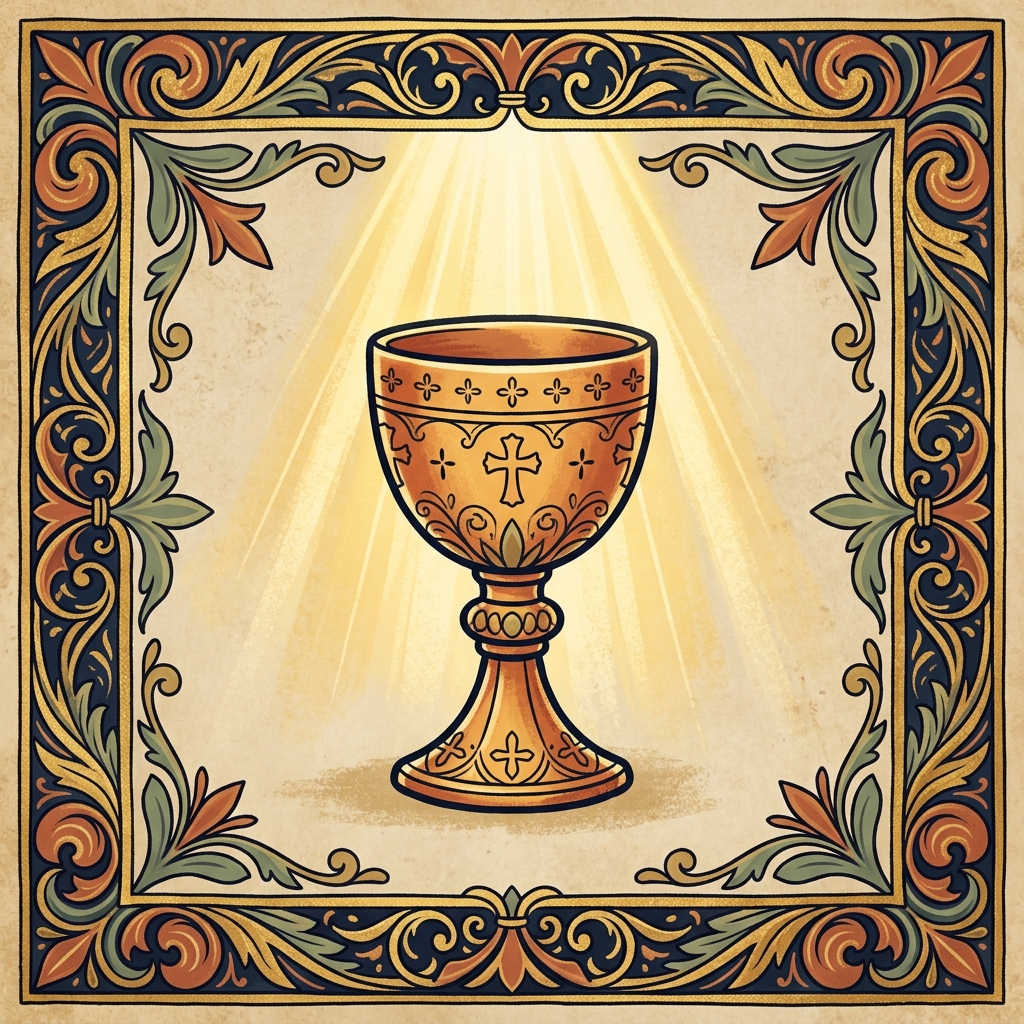
For this monumental victory, Catholic iconography often depicts Saint Norbert holding a chalice or a monstrance, standing triumphantly over the defeated figure of the heretic. He remains the Church's eternal "Apostle of the Eucharist," a herald of the profound reality that Christ dwells, body, blood, soul, and divinity, within our tabernacles.
Lessons for the Modern Pilgrim
As we navigate the spiritual landscape of our own time, the witness of Saint Norbert of Xanten serves as a clarion call. How often do we, like the young Norbert, treat our faith as an accessory, draping our souls in the "silks" of worldly comfort and distraction? We belong to a culture that frequently denies the sacred, rendering the profound mysteries of the altar ordinary in our eyes.
Saint Norbert challenges us to awaken. He reminds us that the pursuit of holiness requires a radical break from the spirit of the age. It requires us to kneel before the Blessed Sacrament with the fierce devotion of a knight before his sovereign. The same Christ who brought a medieval courtier to his knees in the mud of Westphalia waits silently for us in every Catholic parish, longing to ignite a fire of reform within our own hearts.
Let us, the faithful of Sanctus Mission, honor this great saint by renewing our Eucharistic amazement. Let us defend the sanctity of the altar by our reverence, our posture, and our daily conversion.
Reflection Question: In what area of your life is the Lord sending a "thunderclap" to awaken you from the slumber of worldly comfort, and how will you answer His call to seek refuge before the altar?