In the Workshop of Silence and Cedar
In an age captivated by the fleeting and the fragile, where sacred spaces are too often furnished with the cold products of automated assembly, there remain quiet sanctuaries where time retreats to the noble rhythm of chisel, mallet, and prayer. Deep within the rolling hills of the Shenandoah Valley, the workshop of master woodcarver Matthew Miller smells of fresh cedar, walnut shavings, and beeswax. Here, amid tools whose designs have remained unaltered since the Middle Ages, sacred architecture is brought forth from the heart of the forest.
Matthew’s life work is singular and exacting: he designs and hand-carves Eucharistic tabernacles and sacred furnishings for chapels and parish churches across the continent. To step into his atelier is to enter a monastery of sacred labor, where every grain of wood is approached with the reverent understanding that it may one day safeguard the Very Flesh of Christ.
From Fallen Timber to the Holy Ark
“When you lay your hands upon a raw timber of black walnut,” Matthew reflects, his calloused hands tracing the ringed geometry of an unplaned beam, “you are holding years of God’s silent creation. The tree drew water from the earth and light from the heavens. Our duty as artisans is not to conquer the wood, but to unlock the hidden praise within it.”
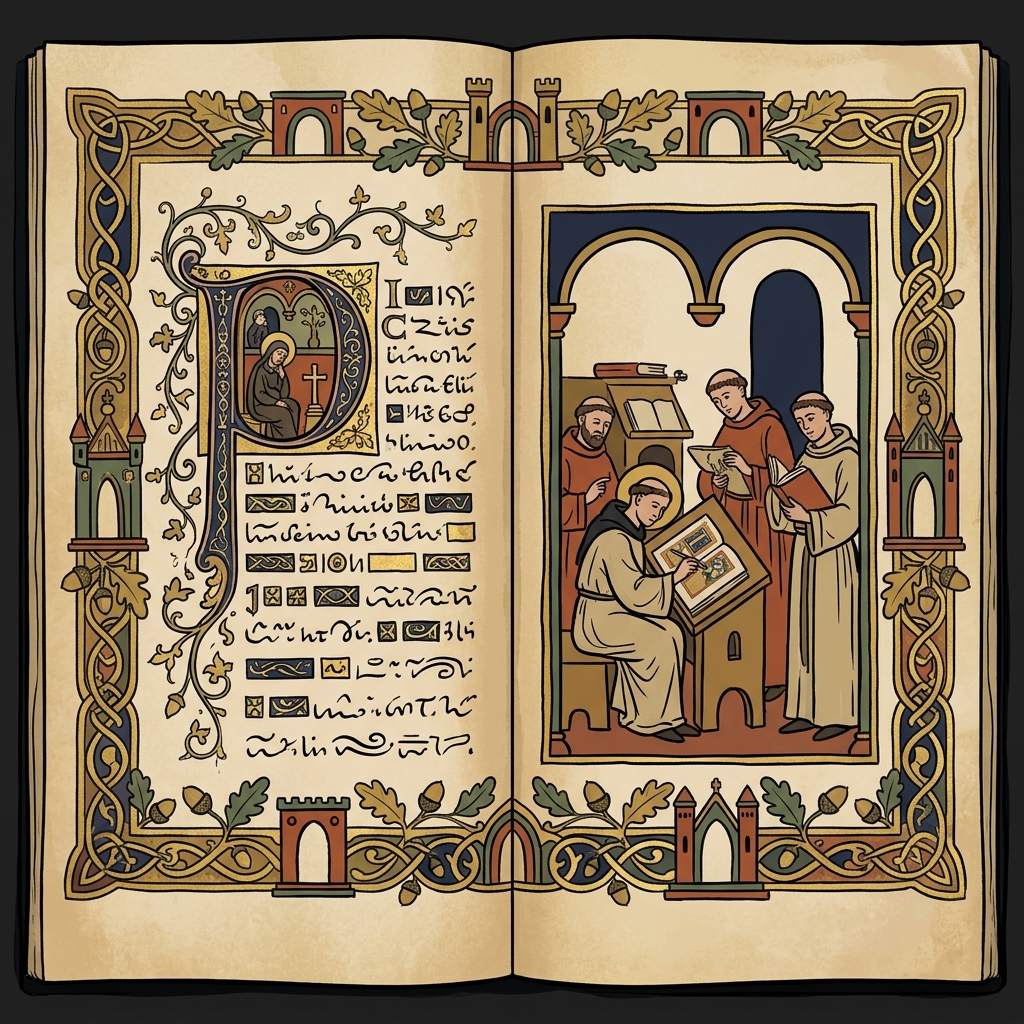
In the tradition of the medieval guilds, Matthew employs no computer-controlled routers or synthetic veneers. Each panel is planed by hand; every relief of acanthus leaves, stylized vines, and Eucharistic symbols is carved using hand-ground gouges. The process for a single tabernacle often spans months, requiring hundreds of hours of patient, deliberate carving.
This meticulous patience is not merely aesthetic; it is fundamentally theological. As St. Thomas Aquinas observed, “Art is nothing other than the right reason about certain works to be made.” In the Catholic tradition, the physical sanctuary must reflect the invisible grandeur of the mysteries celebrated within it. A tabernacle is not a mere cabinet; it is the throne room of the King of Kings, the earthly Ark of the New Covenant. To craft it hastily or cheaply is to forget the majestic dignity of Him who dwells inside.
Sanctified Labor in the Shadow of Saint Joseph
For Matthew, the daily discipline of the chisel is intimately bound to the spiritual life. His workbench is framed by an icon of Saint Joseph the Worker, whose silent example guides every stroke of the mallet. The rhythmic sound of carving becomes a prayer of quiet cadence—a physical manifestation of the ancient monastic motto, Ora et Labora (Pray and Work).
“Saint Joseph knew the density of timber, the stubbornness of knots, and the ache of tired muscles,” Matthew shares. “Yet through that sweat and wood dust, he provided for the Incarnate Word. When an artisan submits his body and mind to the discipline of a noble craft, his work ceases to be mere labor and becomes an offering of praise.”
This philosophy echoes the wisdom of Pope Saint John Paul II’s Letter to Artists, which reminds us that “In human creativity, man finds himself more than ever 'in the image of God'.” Through the transformation of raw natural materials into holy vessels, the artisan participates in a humble echo of the divine Creation.
Restoring Beauty to the Sacred Realm
In recent decades, the Catholic Church has witnessed a renewed yearning for sacred beauty—a desire to return to artistic traditions that elevate the mind and draw the soul toward the transcendent. Churches seeking Matthew’s work are often small missions or revitalized parishes seeking to replace utilitarian fixtures with works that evoke awe and holy fear.
When a tabernacle leaves Matthew’s shop, its final destination is not a museum pedestal, but the center of an altar, where it will be anointed with holy chrism and veiled in silk. It will receive the tears of the faithful, the quiet prayers of night adoration, and the real presence of the Redeemer.
“To know that my work will disappear into the background of the Blessed Sacrament is the greatest honor,” Matthew says softly, wiping away a stray shaving from a newly carved cherub’s wing. “The art exists not to bring glory to the craftsman, but to lead the soul to fall on its knees before God.”
Reflect: How might you bring the spirit of sacred craftsmanship and holy mindfulness into the daily labor of your own vocation today?