In an age captivated by commercial power and earthly splendor, the Church turns her gaze today toward the rugged hills of Umbria. On this fourth day of October, we commemorate Saint Francis of Assisi—the Seraphic Father whose radical conversion sent a shockwave of divine love through medieval Christendom. Yet, in our modern era, the true visage of Francis is too often obscured beneath softened, sentimental caricatures. He was no mere patron of gentle gardens, but a battle-tested knight of the High King, whose armor was holy poverty and whose heraldry was the unadulterated Gospel of Jesus Christ.
The Royal Herald of San Damiano
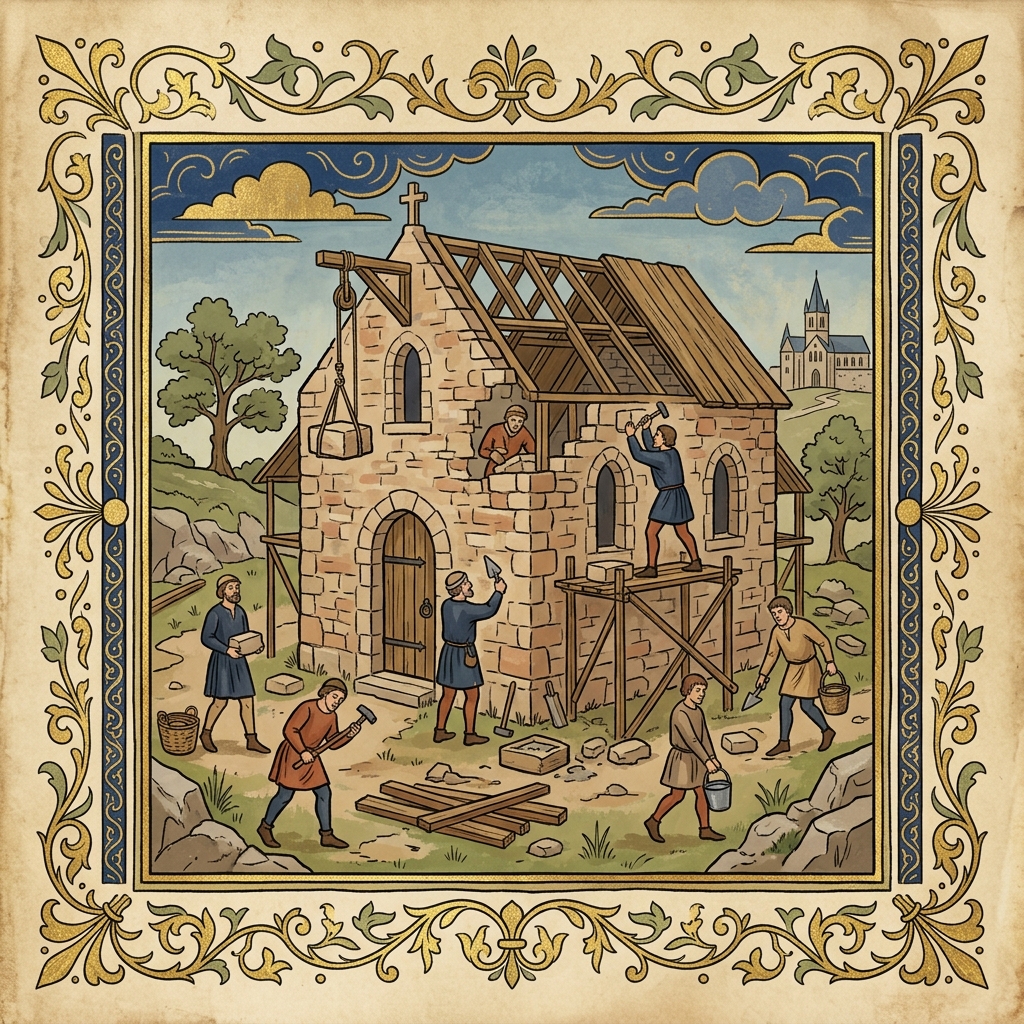
Born into the wealthy merchant class of Assisi, young Francis Bernardone initially sought glory in the chivalric code of earthly warfare. Captured in battle and imprisoned, his worldly ambitions were shattered by the gentle yet piercing voice of grace. It was before the ancient, painted crucifix in the decaying chapel of San Damiano that his true knighthood began. From the silent wood, Christ spoke with unmistakable authority: "Francis, go and repair My house, which, as you see, is falling into ruin."
Francis mistook the command at first as an instruction to restore physical masonry. Yet the divine Suzerain was calling for a far grander restoration: the awakening of a lukewarm Church through absolute conformity to the Crucified Savior. Francis did not hesitate. Stripping himself of his costly garments before the Bishop of Assisi and his biological father, he cast aside his inheritance, declaring with transcendent freedom, "Hitherto I have called Pietro Bernardone my father; henceforth I can truly say: Our Father who art in heaven."
The Armor of Holy Poverty
To Francis, Holy Poverty was not an unfortunate condition to be endured, but a royal bride to be cherished—Lady Poverty. In the medieval feudal system, allegiance was tied to land and wealth; by renouncing all earthly possessions, Francis pledged his undivided vassalage to the King of Kings. As Saint Bonaventure wrote in his celebrated biography of the saint, "Francis strove to be transformed into Christ through love, as Christ was transformed into man through humility."
This was no passive ascetical exercise. The Franciscan vision was an active crusade of the heart. By shedding the weight of material security, Francis and his early brothers gained an unshakeable spiritual freedom. They walked through a turbulent world unburdened by fear, singing the praises of the Creator and bringing the healing balm of Christ to lepers and princes alike. In their radical detachment, they revealed a profound truth to a medieval society choked by avarice: that to possess Christ is to possess everything.
The Seraphic Seal
The culmination of Francis’s earthly pilgrimage occurred upon the desolate height of Mount La Verna in 1224. Two years before his holy death, while absorbed in fervent prayer and fasting for the exaltation of the Holy Cross, a fiery Seraph with six wings appeared before him, bearing the image of a man crucified. As the vision faded, Francis bore in his own flesh the sacred Stigmata—the five wounds of the Redeemer.
He became the first canonized saint in Church history to receive these visible marks of the Passion. The Stigmata were the royal seal of his divine Master, proving that Francis had become so perfectly united to Christ in mind, heart, and spirit that his very flesh reflected the mystery of the Cross. He lived the remainder of his days as a living icon of the Crucified Lord, demonstrating that true nobility is found only in self-emptying love.
Walking the Way of Assisi Today
The lesson of Saint Francis for the modern Catholic is both sublime and challenging. We inhabit a culture that relentlessly measures human dignity by accumulation, status, and self-assertion. Against this tide, the Poor Man of Assisi stands as a beacon of holy contradiction. Reclaiming his spirit does not require us all to wander the hills in coarse woolen tunics, but it demands that we cultivate a Franciscan heart within our own vocations.
We are called to strip away the idols of comfort and vanity that entangle our souls. We are summoned to repair the domestic churches of our homes and parishes through quiet humility, relentless prayer, and courageous charity toward the broken. Let us look upon the Crucified Lord as Francis did, allowing His divine love to reorder our affections and spark a sacred renewal in our time.
Reflective Question for the Soul: In what quiet area of your life is the Lord calling you to strip away worldly pretenses so that His sacred beauty may be shone through you?