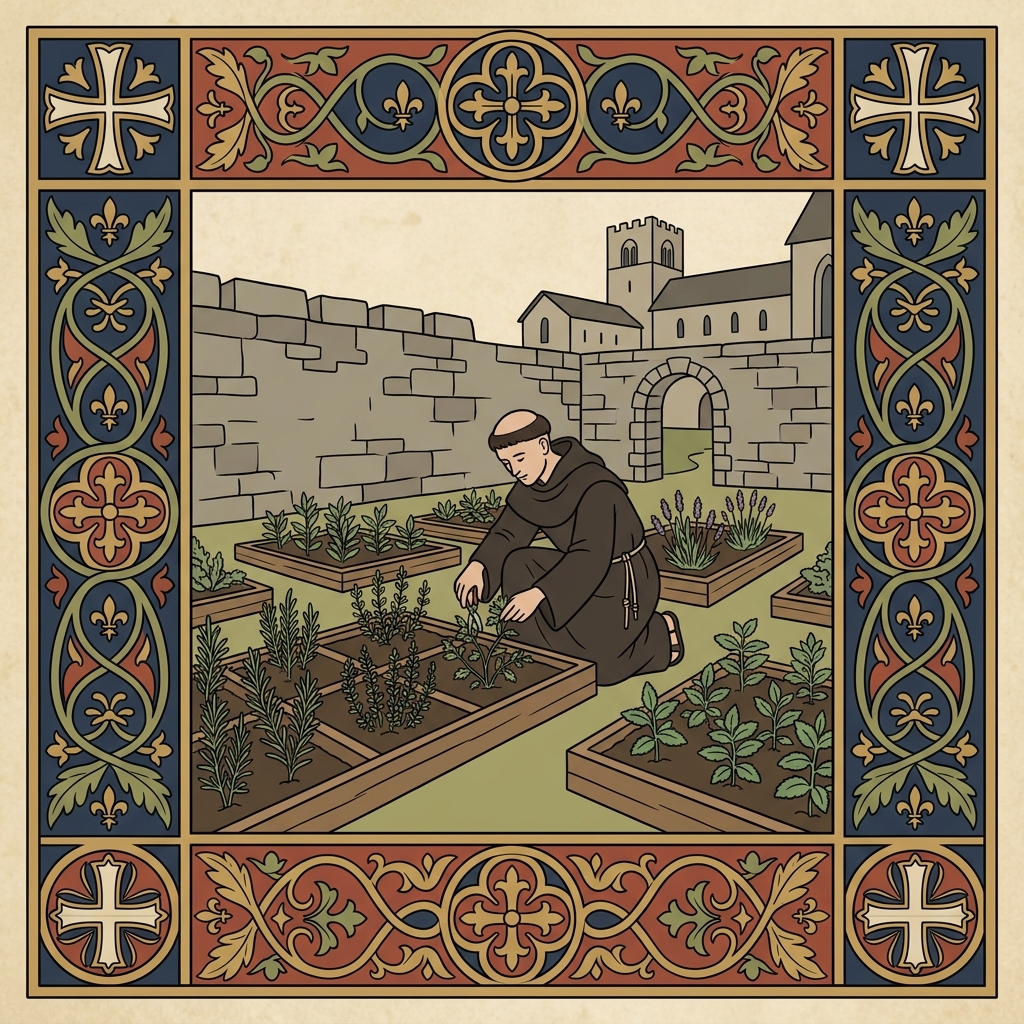
In an age enslaved to the ephemeral glow of screens, there remains a quiet rebellion taking place within the thick stone walls of a workshop in the Appalachian foothills. Here, surrounded by the scent of beeswax, lavender, and crushed minerals, resides master illuminator Gabriel Vance. Gabriel does not type; he inscribes. He does not produce; he crafts. Through the venerable discipline of manuscript illumination, he resurrects a medieval art form to clothe the eternal Word in garments of gold and crushed stone.
"Art is born of the Incarnation," Gabriel shares, his hands stained with the faint, indelible shadows of iron gall ink. "When the Word became flesh, He sanctified matter. In this workshop, we take the physical world—stones, bark, eggs, and metals—and invite them to participate in the liturgy of beauty."
The Alchemy of Earth and Grace
Gabriel’s craft begins long before the brush touches the vellum. It begins in the soil. To witness his preparation is to step back into the scriptoriums of the twelfth century. He grinds lapis lazuli for his vibrant blues, malachite for his greens, and creates his ink from oak galls foraged from the forest floor, steeped in rainwater and iron salts. The calfskin vellum itself must be meticulously prepared, stretched on a wooden frame, and sanded with pumice stone until it achieves a velvety texture capable of receiving the sacred text.
The crowning glory of his work, however, is the application of 24-karat gold leaf. Using an ancient technique, Gabriel prepares a base of gesso—mixed with honey, glair, and Armenian bole—upon which the whisper-thin gold is laid. He then burnishes it with a polished agate stone until it shines like a mirror.
"The gold does not represent wealth," he explains, echoing the deep theology of the monastic tradition. "It represents uncreated light. It reminds us that the words upon this page are not of human origin, but divine revelation. When the candlelight hits the page, the gold catches it, and the Word literally appears to illuminate the darkness."
The Liturgy of the Quill
To illuminate a sacred text is to enter into a profound monastic rhythm. For Gabriel, the physical act of writing is a tactile form of prayer. The rhythmic scratching of his hand-cut goose-feather quill against the vellum is the only sound in the studio—a steady heartbeat of devotion. Each stroke demands an unwavering presence of mind. There is no 'undo' button; a slip of the hand means scraping the vellum or beginning anew, serving as a daily masterclass in humility and the arduous pursuit of excellence.
"He who does Christ's work must stay with Christ always." — Fra Angelico
Gabriel embodies the venerable maxim of the great Dominican artist. Before he begins a commission—whether it is a Gospel cover, an altar card for the traditional Latin Mass, or a resplendent passage from the Psalms—he spends an hour before the Blessed Sacrament. The peace he receives in the presence of the Eucharistic Lord becomes the true ink of his labor, flowing directly down his arm, through the quill, and onto the page.
An Antidote to the Ephemeral
In the year 2026, the world moves at a blistering, unyielding pace. Information is consumed, scrolled past, and discarded in fractions of a second. Gabriel’s illuminated manuscripts stand as a majestic, towering contradiction to this transient culture. They are built to last for a millennium. They do not merely invite the reader to look; they demand that the reader halt and contemplate.
"Modern typography is designed for speed and efficiency," Gabriel observes, carefully wiping a sable brush on a linen cloth. "But an illuminated manuscript is designed to halt you. The intricate knotwork, the trailing vines, the sudden, blinding flash of gold—it all commands reverence. It forces the eye to pause, preparing the soul to receive the weight of the words."
This is the vital mission of the modern Catholic artisan: to create sanctuaries of beauty in a world starved of transcendence. Through our shared ethos at Sanctus Mission, we are reminded that reclaiming these tactile, incarnational traditions is not mere nostalgia. It is an act of spiritual warfare against the banality of the modern age.
Bearing the Light
Gabriel’s workshop is a living testament to the enduring power of the Catholic imagination. His illuminated texts are more than mere aesthetic decorations; they possess a sacramental character, pointing the weary soul toward the gates of the heavenly Jerusalem. As the late Pope Benedict XVI so beautifully taught, true beauty unlocks the yearning of the human heart, serving as a dart that wounds us and draws us toward God.
As the sunlight wanes in the Appalachian valley, casting long shadows across his drafting table, the burnished gold of his latest manuscript catches the dying light. The ancient words seem to burn with an inner, inextinguishable fire: In principio erat Verbum—In the beginning was the Word.
By dedicating his life to this noble craft, Gabriel reminds us that beauty is not a luxury, but a divine necessity. It is a silent evangelist, drawing the heart upward toward the eternal Author of all that is good, true, and beautiful.
Reflection Question: In a world that relentlessly prizes speed, efficiency, and digital convenience, how might you incorporate a sense of slow, deliberate reverence into your daily duties to make them a more pleasing offering to God?