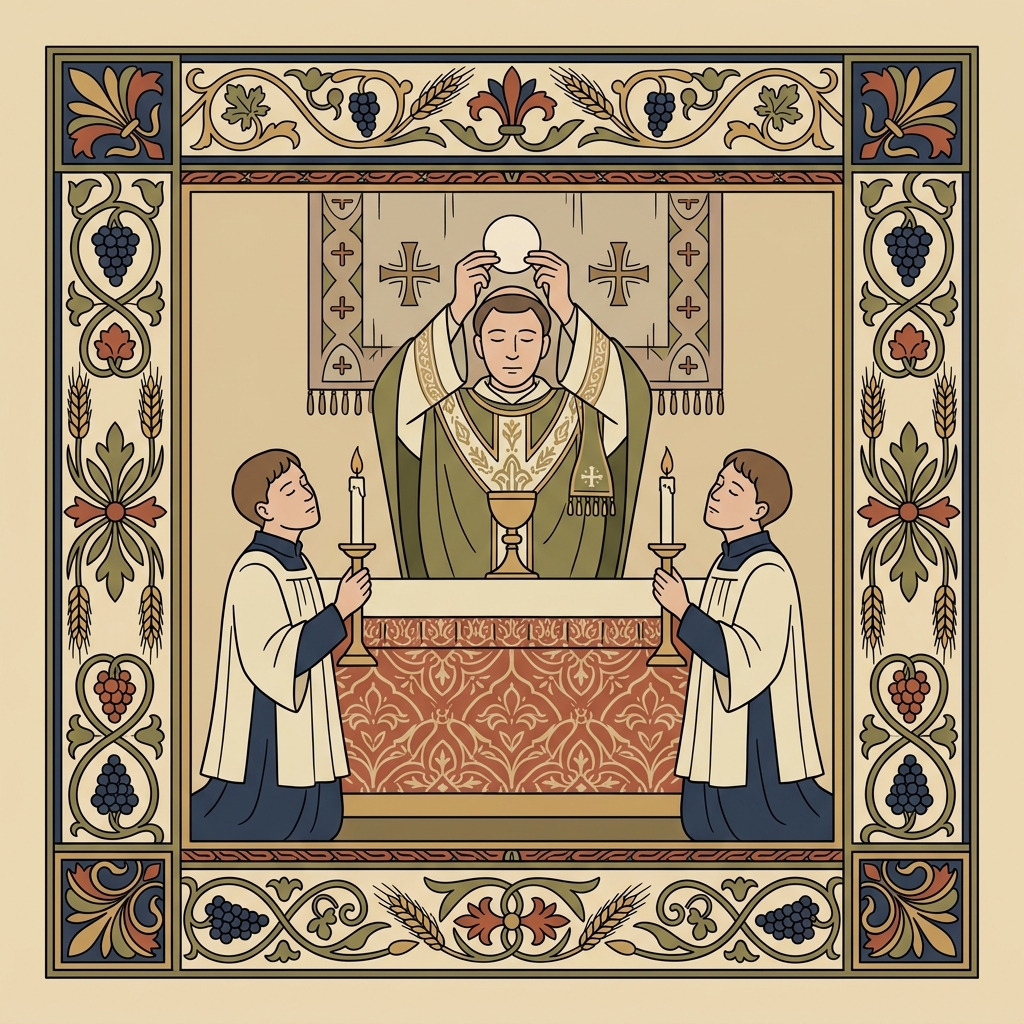
In the nascent hours of a July morning, before the relentless march of the world’s demands begins, there exists a sacred stillness. It is in this quiet frontier of the day that the modern pilgrim, much like the medieval ascetic, seeks a moment of fortification before stepping onto the battlefield of daily life. For many of us, this daily preparation is anchored by a familiar, earthy ritual: the brewing of coffee. Yet, if we approach this routine with the eyes of faith, the preparation of our morning cup ceases to be a mere physical necessity. It becomes a profound liturgy of the hearth, a tactile entry into Catholic contemplation.
The Mortification of the Bean
The ritual begins with a necessary breaking. The grinder fractures the hard, unyielding coffee beans, shattering their defenses to unlock the rich oils and aromas trapped within. Here, in the harsh sound of the grind, we find a striking metaphor for the purgative way of the spiritual life. By our fallen nature, our hearts are often like the unroasted, unground bean—hardened by pride, enclosed in self-reliance, and resistant to the transformative work of grace.
As Saint Ignatius of Antioch famously declared as he faced the Roman arena, "I am the wheat of God, and let me be ground by the teeth of the wild beasts, that I may be found the pure bread of Christ." Though our daily grind is rarely a physical martyrdom, the spiritual reality holds true: it is only through the mortification of our stubborn wills and the breaking of our ego that the sweet fragrance of virtue can finally be released. We must allow the Lord to grind away our self-sufficiency so that we might yield something of eternal value.
The Alchemy of Living Water
Once the breaking is complete, the fractured grounds await the descent of the scalding water. This is the alchemy of grace. In the tradition of the Church, water is the great symbol of the Holy Spirit, the living stream that washes, purifies, and animates. When the boiling water pours over the dark earth of the coffee, a profound transformation occurs. The water takes upon itself the essence of the crushed beans, drawing out a robust, life-giving draft from the bitterness of the remnants.
Saint Teresa of Avila frequently employed the imagery of water to describe the degrees of prayer, teaching that the soil of the soul must be watered to cultivate the virtues. In our morning kitchen, we are reminded that our brokenness is not an end unto itself. When we allow the fiery, living waters of God’s love to pour over our fractured hearts, He draws forth a rich and sustaining grace, transfiguring our weaknesses into strength.
The Domestic Desert
With the warm, dark vessel cradled in our hands, the modern kitchen is momentarily transfigured. It is no longer merely a room of culinary utility; it becomes a domestic desert, a hermit’s hearth. We sit in the dim light of the dawn, mirroring the ancient Desert Fathers who withdrew into the arid sands of Egypt to escape the spiritually deafening noise of the empire. In this pocket of silence, guarded by the steam rising like morning incense, the soul breathes.
We are invited to simply be in the presence of the Lord. Thomas à Kempis reminds us in The Imitation of Christ, "In silence and quiet the devout soul advances in virtue and learns the hidden truths of Scripture." The steaming mug affords us the excuse to sit still, to listen to the whisper of the Lord before the world insists that we speak.
The Vigil of the Heart
Ultimately, the purpose of this dark draft is wakefulness. The physical caffeine quickens the pulse and clears the fog of sleep from the mind, but the true awakening we seek is of a spiritual nature. The monks of the Middle Ages rose in the dead of night to chant Matins, maintaining a vigilant watch for the coming of the Divine Bridegroom. Our morning coffee is our liquid vigil. It is a tactile commitment to remain awake to the promptings of the Holy Spirit, to cast off the slumber of spiritual indifference, and to refuse to sleepwalk through the noble, chivalric adventure of our daily Christian vocation. We drink to open our eyes to the presence of God in the ordinary.
A Sending Forth
As the final drop is savored and the cup is set upon the counter, the sun has fully breached the horizon. The peace gathered at the hermit’s hearth cannot be hoarded; it must now be carried out into the clamor of the day. Armed with the stillness of the morning and the grace of a wakeful heart, we step out of our domestic deserts and into the world, ready to serve the Sovereign Lord in whoever crosses our path today.
Reflection Question: As you take your first sip of coffee tomorrow morning, what hardened part of your heart will you ask the Lord to break down, that the rich fragrance of His grace might be released in your life today?