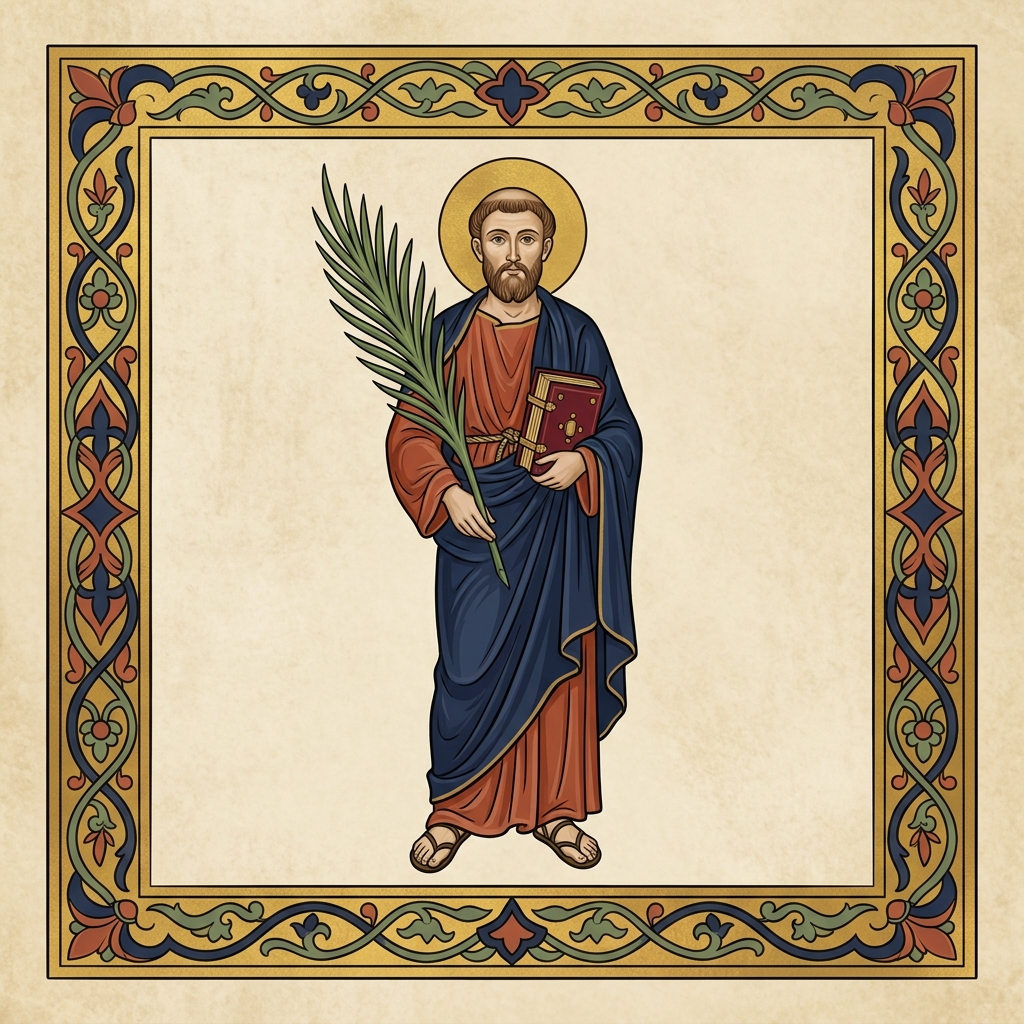
On this twenty-ninth day of July, the sacred liturgy bids us travel the dusty, winding road that descends from the great temple of Jerusalem into the quiet, unassuming village of Bethany. It is here, in the home of Saints Martha, Mary, and Lazarus, that Christ our Lord found a refuge of friendship and hospitality. Yet, this holy house is more than a mere historical waystation; in the medieval tradition, the home at Bethany is understood as a profound microcosm of the Christian soul, housing the two great pillars of the spiritual journey: the active and the contemplative life.
The Cloister and the Hearth: Understanding the Two Lives
For centuries, the spiritual masters of the Church have looked to the sisters of Bethany to understand the dual calling of the baptized. Martha stands as the patroness of the active life—the life of charity, labor, and the spiritual and corporal works of mercy. Her hands are calloused with holy service, her mind occupied with the noble work of providing shelter and sustenance for the Lord of the Universe.
Mary, conversely, is the icon of the contemplative life. She sits at the feet of Jesus, her hands still, her heart entirely captivated by the Uncreated Word. The ancient monastic traditions frequently compared these two lives to the two wives of Jacob: Leah, who was blear-eyed but fruitful (the active life), and Rachel, who was barren but beautiful (the contemplative life). The great Pope Saint Gregory the Great taught that the soul must embrace the toils of Leah to earn the beautiful vision of Rachel.
The Better Part: The Primacy of Contemplation
In the Gospel narrative, tension arises when the demands of the hearth clash with the silence of the sanctuary. Martha, burdened by her serving, asks the Lord to command her sister to help her. Christ’s gentle rebuke resonates through the centuries: "Martha, Martha, you are anxious and troubled about many things; one thing is needful. Mary has chosen the good portion, which shall not be taken away from her" (Luke 10:41-42).
Here, the Church teaches us a vital doctrine of the interior life: the absolute primacy of contemplation. Martha’s error did not lie in her service—for service is magnificent and necessary—but in her anxiety. She allowed the multiplicity of her tasks to fragment the unity of her heart. The "better part" belongs to Mary because contemplation is the only thing that crosses the threshold of eternity. In the heavenly Jerusalem, our active labors will cease; there will be no hungry to feed and no naked to clothe. But the adoring gaze of Mary—the beatific vision of God—will endure forever.
The Holy Marriage of Action and Silence
Does this mean we must abandon the hearth and retreat entirely to the cloister? By no means. The genius of the Catholic tradition is found not in division, but in holy synthesis. Saint Thomas Aquinas reminds us that the highest form of the Christian life is not purely contemplative, nor purely active, but rather contemplata aliis tradere—to hand on to others the fruits of one's contemplation.
Saint Teresa of Avila, the great reformer and mystic, articulated this harmony beautifully when she instructed her sisters: "To give our Lord a perfect hospitality, Mary and Martha must combine." Action and contemplation are not enemies; they are sisters. The active life must flow from the wellspring of the contemplative life. If we labor without first sitting at the feet of Christ, our work becomes hollow activism, susceptible to burnout and worldly anxiety. If we pray but refuse to serve, our piety risks becoming a self-indulgent illusion. True Faith Formation requires that our hands do the work of Martha only because our hearts possess the stillness of Mary.
Fostering a Bethany of the Heart
In our modern age, besieged by the ceaseless noise of digital distraction and the frantic pace of worldly ambition, building a Bethany within the soul is a formidable task. The modern world is overwhelmingly "Martha," driven by production, metrics, and endless motion.
To restore the medieval balance, we must intentionally carve out sanctuaries of silence in our daily routines. This means consecrating the first fruits of our morning to mental prayer before touching the tools of our trade. It means allowing the rhythms of the Angelus or the Holy Rosary to punctuate the workday, drawing the mind back to the "one thing necessary." By anchoring our souls in the Blessed Sacrament, the ultimate meeting place of heaven and earth, we ensure that our external actions are animated by divine grace rather than human striving.
When we reconcile the hearth and the sanctuary within ourselves, our very lives become a place of rest for the weary Savior, a true Bethany where the Word is both adored in silence and served in charity.
Reflection Question: In the architecture of your own daily routine, are you allowing the silent sanctuary of Mary to govern and inspire the busy hearth of Martha, or has the noise of the world drowned out the "one thing necessary"?