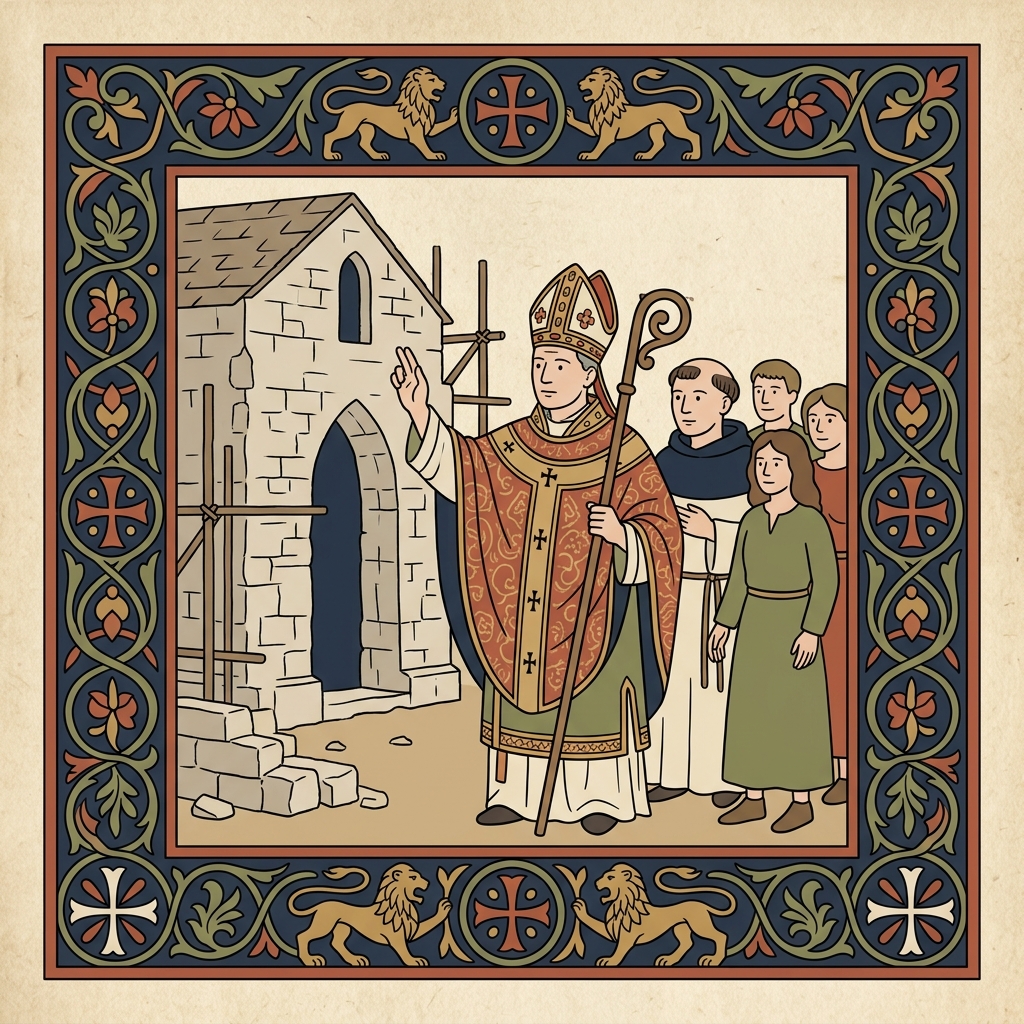
In an age where speech is often reduced to fleeting noise and truth is tailored to suit imperial whim, Holy Mother Church turns her eyes toward Antioch and Constantinople to commemorate one of her greatest shepherds. Saint John Chrysostom—whose title literally signifies 'the Golden-Mouthed'—stands across the centuries not merely as an orator of unmatched splendor, but as a towering fortress of pastoral fidelity. As his feast day on September 13 approaches, his voice echoes with surprising urgency into our own fragmented century.
The Herald of Antioch and Constantinople
Born into the noble culture of 4th-century Antioch, John was educated by the finest pagan rhetoricians of the Roman world. Yet, the grandeur of worldly philosophy could not satisfy a soul ignited by the Gospel. Withdrawing into the austere silence of the Syrian desert, he spent years in rigorous monastic discipline, memorizing the Sacred Scriptures and subjecting his flesh to the discipline of the Cross. When he emerged, his speech was no longer merely refined; it was transfigured by the Holy Spirit.
Ordained a priest in Antioch and later elevated, against his personal inclination, to the Patriarchal See of Constantinople, Saint John brought the purity of the desert into the glitter of the imperial court. He did not flatter the nobility, nor did he soft-pedal the demands of the Gospel. In an imperial city prone to vanity, luxury, and spiritual apathy, his homilies fell like lightning bolts upon slumbering consciences.
The Double Altar: Eucharistic Mystery and Christian Mercy
Saint John Chrysostom is perhaps most revered for his deep Eucharistic theology. To this day, the Eastern Church celebrates the Divine Liturgy that bears his venerable name. For Chrysostom, the Holy Sacrifice of the Mass was the very heart of the Christian life—a breathtaking reality where heaven bends down to touch earth, and where the faithful partake of the uncreated light of God.
Yet, Chrysostom insisted that reverence for the Eucharist could never be separated from active love for the poor. He spoke famously of the 'two altars': the golden altar within the sanctuary where Christ’s body is made sacramentally present, and the living altar outside the church doors—the poor, the sick, and the abandoned—where Christ suffers in His members.
"Do you wish to honor the Body of Christ?" Chrysostom preached to the stunned congregations of Constantinople. "Do not ignore Him when He is naked. Do not pay Him homage in the church clad in silk, while outside He is perishing from cold and nudity. He who said, 'This is My Body,' is the same Who said, 'You saw Me hungry and you gave Me no food.' What good is it if the Eucharistic table is laden with golden chalices, while He is dying of hunger?"
This was not political ideology; it was pure, unadulterated Gospel. For John, every work of mercy was an extension of the Liturgy, an act of adoration offered to the King of Kings.
The Price of Uncompromising Truth
True holiness inevitably incurs the hatred of a fallen world. Chrysostom’s fearless condemnation of systemic corruption, moral compromise, and the abuse of wealth drew the ire of Empress Eudoxia and corrupt clerics alike. Banished twice from his see, stripped of his earthly honors, and marched across brutal terrain in exile, the saint remained unbroken in spirit.
His final years were spent in physical agony, dragged through snow and scorching sun under heavy military guard. Yet, when his exhausted body finally gave way in Comana in Pontus in the year 407, his final words on earth summed up a lifetime of heroic surrender: "Glory be to God for all things!"
Practical Lessons for the Modern Pilgrim
The life of the Golden-Mouthed Father offers profoundly practical counsel for modern Catholics striving to live faithfully in a complex culture:
- Custody of the Tongue: Chrysostom taught that our mouths, having received the Body and Blood of Christ in Holy Communion, should never become instruments of gossip, slander, or profanity. Honor the Eucharist by sanctifying your speech.
- Integrity of Worship: Our love for the Mass must bear tangible fruit in our daily lives. Seek out Christ in the lonely, the elderly, and the needy within your family and parish community.
- Courage in Witness: Do not fear the disfavor of contemporary society when standing up for the truth of the Catholic faith. Loyalty to Christ demands a holy boldness that prefers divine approval over human praise.
As we honor Saint John Chrysostom, let us pray for a portion of his courage, that our speech may be seasoned with grace, our hearts standard-bearers of charity, and our lives an unbroken song of praise to the Holy Trinity.
Reflection Question for Contemplation: In what area of your daily life is God calling you to speak the truth with greater love and courage, even if it requires a personal sacrifice?