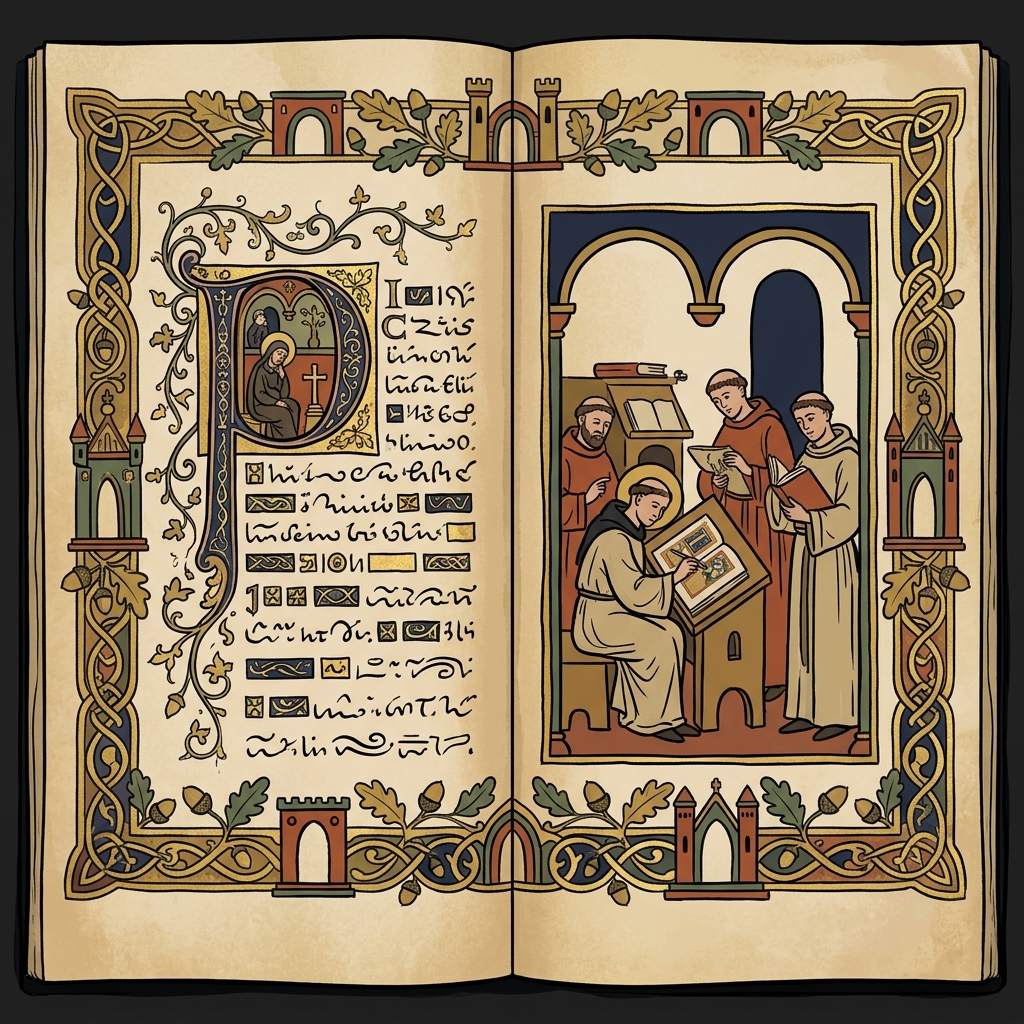
In the quiet, predawn hours, before the bell of the local parish calls the faithful to the Holy Sacrifice of the Mass, many of us seek the comforting warmth of a dark, fragrant brew. Yet, long before that aromatic liquid graces your morning cup, a violent and beautiful alchemy must occur. In the raw, the coffee bean is a hard, pale green seed, possessing none of the intoxicating aroma or deep, resonant flavor that we associate with our morning vigil. It is grassy, unyielding, and dormant. To become the vessel of warmth that fuels our daily mission, it must first be subjected to the crucible of the roaster.
The Crucible of the Roaster
In the medieval mind, the forge was a place of profound spiritual metaphor. The blacksmith’s fire was not merely a tool of industry, but a reflection of the purgative fires of God’s love, burning away the dross to reveal the pure gold beneath. The modern coffee roaster is much the same. Within its iron belly, the green seeds are tumbled in blistering heat. They are tossed in the dark, enduring temperatures that strip away their moisture and alter their very chemical composition.
Is this not the precise nature of our spiritual journey? The soul, untouched by the refining fire of divine grace, remains like the green bean—hardened by the world, clinging to its own self-sufficiency, and incapable of offering up the sweet fragrance of heroic virtue. The great Carmelite mystic, Saint John of the Cross, famously compared the soul to a log of wood cast into a fire. Before the wood can become one with the flame, the fire must first draw out its moisture, blacken it, and make it look ugly. Only then does it ignite and glow with light and heat. So, too, must we be tumbled in the roaster of earthly trials, allowing the Holy Spirit to burn away our worldly attachments.
The First and Second Crack: The Breaking of the Will
Ask any artisan roaster, and they will tell you of the pivotal moments in the roasting process: the "first crack" and the "second crack." As the internal pressure of the bean mounts in the intense heat, it literally bursts open with an audible pop. This violent expansion is absolutely necessary; without this breaking, the complex oils and sugars trapped within cannot be caramelized and brought to the surface.
In the spiritual life, this "breaking" is the surrender of our stubborn human will. How often do we resist the heat of God’s providence? We prefer the safety of our hardened, green state. Yet, the Psalmist reminds us,
"A broken and contrite heart, O God, you will not despise" (Psalm 51:17).It is only when our pride cracks under the gentle but unrelenting heat of divine love that the hidden virtues—patience, humility, charity—are drawn to the surface. The breaking is not an act of destruction by a cruel master, but the masterful craftsmanship of a loving Creator who knows the exquisite potential hidden within us.
Baptizing the Bitter Draught
There is a noble Catholic tradition of baptizing the secular, of taking what the world offers and elevating it to the service of Christ. Pious legend recalls that when coffee was first introduced to Christendom from the Ottoman Empire, cautious advisors petitioned Pope Clement VIII to ban the dark liquid, labeling it the "bitter invention of Satan." The Holy Father, however, requested a taste. Upon savoring its rich, invigorating flavor, he is said to have declared:
"Why, this Satan's drink is so delicious that it would be a pity to let the infidels have exclusive use of it. We shall fool Satan by baptizing it and making it a truly Christian beverage."
The roasted bean, once a symbol of the foreign and the unknown, was claimed for the Kingdom. It became the drink of monks keeping vigil in the scriptorium, of missionaries charting the wilderness, and of families gathering before morning prayers. It stands as a testament to the Catholic instinct to find God’s goodness hidden in the earth, to bless it, and to use it for His glory.
The Alchemy of Extraction
Even after the fire has done its work, the roasted bean must undergo one final mortification: it must be ground to dust and submerged in scalding water. It is here, in the extraction, that the coffee yields its very essence. The hot water draws out the oils, the flavors, and the life-giving warmth, leaving behind the spent grounds.
When we steep ourselves in contemplation, when we pour out our lives in the service of the Sanctus Mission, we are undergoing our own extraction. We allow the living waters of God’s grace to wash over us, drawing out the "flavor" of the Gospel to share with a weary world. The fire of the roast prepares us, but it is the pouring out of ourselves that fulfills our purpose.
The next time you hold a warm mug in your hands in the quiet of the morning, do not merely consume it. Let it be a sacramental of sorts—a reminder of the forge, the fire, and the breaking. Give thanks to the Master Roaster who does not leave us in our hardened, unyielding state, but loves us enough to subject us to the flame.
Reflection Question: Consider the trials or discomforts currently present in your life; how might God be using this "heat" to crack your stubbornness and draw forth a deeper, more fragrant faith?