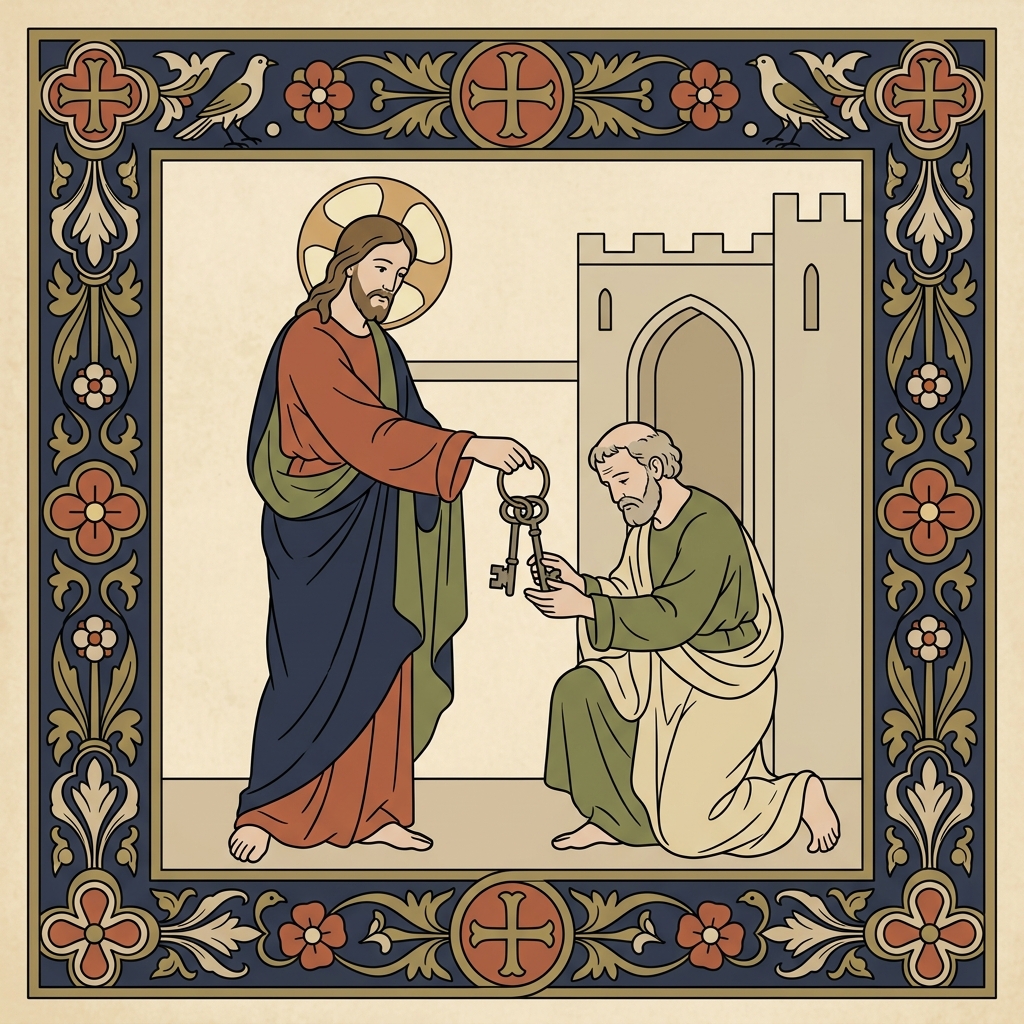
In the quiet turn of early September, as the golden light of late summer begins to yield to autumn's contemplative chill, the Church commemorates one of her most sublime fathers: Saint Gregory the Great. Born into the nobility of ancient Rome during a century wracked by plague, invasion, and economic ruin, Gregory seemed destined by blood to wear the magistrate's toga. Yet, the grandeur of his story lies not in his earthly ancestry, but in his total surrender to the King of Kings.
Reflecting upon Gregory’s feast day (September 3), we find a shepherd who bridged the collapse of antiquity and the birth of Western Christendom. He remains a beacon for every Catholic called to live with sanctified purpose amidst a world in upheaval.
From Prefect to Monastic Solitude
By his early thirties, Gregory had reached the pinnacle of Roman civil authority, serving as the Prefect of the City. He held wealth, honor, and administrative dominion over the eternal city. Yet, the inner quiet of his soul burned for something far higher than earthly governance. Upon the death of his father, Gregory took a step that confounded the worldly mind: he renounced his political power, bestowed his vast wealth upon the poor, and converted his family mansion on the Caelian Hill into a monastery dedicated to Saint Andrew.
There, clad in the humble habit of a Benedictine monk, Gregory found his greatest joy. He sought only the hidden life of prayer, fasts, and sacred study. In his own writings, he would later look back upon those peaceful monastic years as the happiest of his life, describing them as a serene harbor from which his soul contemplated the heavenly fatherland.
“An untroubled mind gives life to the body, but envy rots the bones. For he who desires to be truly great must seek not the applause of men, but the favor of the Creator.” — Saint Gregory the Great
Servus Servorum Dei: The Paradox of True Greatness
Providence, however, had broader plans for the holy monk. Against his own deep longing for solitude, Gregory was plucked from his cell by the hand of the Church. First dispatched as a papal envoy to Constantinople, he was later unanimously elected Pope in 590 AD during a catastrophic flood and devastating pestilence in Rome.
Rather than claiming imperial splendor, Gregory adopted a title that forever redefined ecclesiastical authority: Servus Servorum Dei — “The Servant of the Servants of God.” At a time when civil institutions had collapsed, Gregory fed the hungry, restored order to ruined cities, defended Italy against barbarian incursions, and dispatched Saint Augustine of Canterbury on a daring missionary voyage to evangelize the Anglo-Saxons.
Yet, amidst these titanic endeavors, he reformed the sacred liturgy and nurtured the holy chant that still bears his name. Gregorian chant, with its unhurried, noble cadence, reflects the interior stillness of a pontiff who governed the world while remaining entirely detached from it.
Pastoral Wisdom for an Anxious World
In his masterwork, the Regula Pastoralis (Pastoral Care), Saint Gregory laid out the delicate art of spiritual leadership. He insisted that anyone called to guide others must first master the art of self-governance, maintaining a soul rooted in deep prayer while engaging actively with the needs of the neighbor.
For the faithful of our present generation, Saint Gregory offers three timeless principles of Catholic action:
- Order in the Midst of Chaos: When societal foundations crumble, the Christian does not despair. We build places of prayer, practice tangible charity, and anchor our minds in eternal truths.
- Humility in Authority: Whether as parents, leaders in our workplaces, or servants in our parishes, true authority is demonstrated through self-sacrificing love and humble duty.
- Fidelity to Prayer: No matter how demanding our daily obligations become, the soul must retain an inviolable monastery within — a quiet sanctuary where Christ remains the center.
Saint Gregory the Great reminds us that holiness does not require us to flee our obligations, but to transform them through the fire of divine charity. In every epoch, Christ seeks souls through whom He can bring light to darkness and peace to troubled hearts.
Reflective Question for the Week: Where in your daily state of life is Christ calling you to trade the anxiety of earthly control for the quiet strength of humble service?