The Minor Sanctuary of the Morning
It is the first of August, and outside, the world is wrapped in the heavy, lingering warmth of late summer. Yet, in the hours before the sun breaches the horizon, a profound and holy silence reigns. Long before the clamor of emails, the demands of the day, and the relentless machinery of the modern world begin to grind, there is a sacred window of time. For the contemplative soul, the kitchen in these early hours becomes a minor sanctuary—a domestic cloister where the day is oriented toward the Divine.
In the great medieval abbeys, the monks were roused in the pitch black of night by the tolling of a bell, calling them to the choir for Matins. They rose from their hard beds to keep watch while the world slept, standing as sentinels of prayer. Today, for many of us in the lay state, the call to our morning vigil is announced not by a great bronze bell in a stone tower, but by the hum of a coffee grinder and the low, steady whistle of a kettle.
The Mortification of the Bean
There is a profound theological poetry written into the very act of brewing a cup of coffee. Consider the roasted coffee bean. In its whole state, it is hard, sealed, and stubbornly holds its essence within. Before it can yield the rich, dark draft that will awaken the mind, it must first be broken. It must be crushed.
Herein lies a mirror to our own spiritual lives. How often is the human heart rigid and closed, hardened by pride, comfort, or the creeping cynicism of the age? The spiritual masters teach us that the soul, like the bean, must undergo its own mortification. Through the gentle, daily grind of patience, humility, and the acceptance of small crosses, our hard exteriors are fractured. As the Psalmist declares, "A sacrifice to God is an afflicted spirit: a contrite and humbled heart, O God, thou wilt not despise" (Psalm 51:19). It is only when we allow ourselves to be broken open by grace that our true purpose can be extracted.
The Ascent of Incense and the Fire of the Spirit
Once the beans are ground into dust, the ritual continues. The hot water is poured over the grounds. In the pour-over or the French press, we witness a sudden bloom—a violent, beautiful reaction where heat meets the crushed bean, and a rich, earthy aroma fills the air.
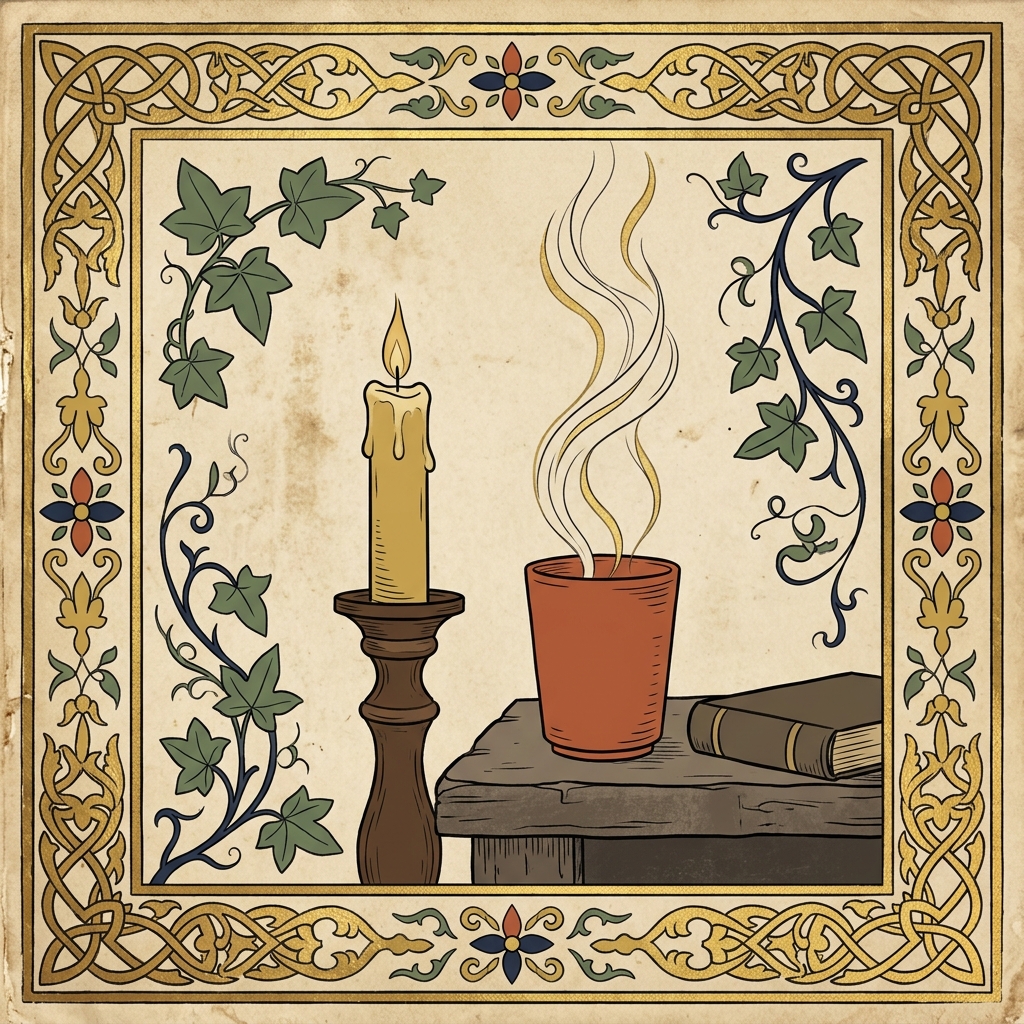
The element of water, heated by fire, serves as an ancient symbol of the Holy Spirit. Without the fire of divine charity, the crushed soul remains merely broken dust. But when the burning love of the Spirit is poured over our contrite hearts, virtue is extracted, and something entirely new is created. As the steam rises from the cup, carrying with it that warm, awakening fragrance, we are reminded of the evening liturgy: "Let my prayer be directed as incense in thy sight; the lifting up of my hands, as evening sacrifice" (Psalm 141:2). Even in the morning, our first thoughts, ascending with the steam of our brew, rise as a fragrant offering to the throne of God.
Baptizing the Dark Draft
Legend holds that when coffee first made its way to Europe, certain advisors to Pope Clement VIII begged him to ban it. They looked upon the black, bitter liquid, imported from foreign lands, and called it "the bitter invention of Satan." The Holy Father, however, requested a taste. Upon drinking it, he was struck by its warmth and its power to clear the mind. He supposedly declared, "This Satan's drink is so delicious that it would be a pity to let the infidels have exclusive use of it. We shall fool Satan by baptizing it and making it a truly Christian beverage."
Whether historically precise or a pious legend, the theology of the tale is profoundly Catholic. We take the things of the earth—water, beans, fire, and human labor—and we elevate them. The dark draft becomes an instrument of vigilance. Monks and mystics soon utilized coffee to stay alert during their long nocturnal vigils, allowing the caffeine to stimulate the intellect while the Holy Spirit stimulated the soul.
The Vigil of the Heart
As you sit down this Saturday morning, wrapping your hands around the warm ceramic mug, look at the dark liquid within. Let it be a reminder of the spiritual wakefulness to which Christ calls us. "Watch ye therefore, because you know not what hour your Lord will come" (Matthew 24:42).
The warmth of the cup comforts the body, but the silence of the morning must comfort the soul. Before the first light of dawn breaks through the windowpane, take a moment to savor the stillness. Let the bitterness of the roast remind you of the reality of sin, and the sweetness of the resulting clarity remind you of the mercy of God. Drink deeply, and allow your heart to awaken to the presence of the Great King, who waits for you in the quiet of the dawn.
"My soul waits for the Lord more than watchmen for the morning, more than watchmen for the morning." — Psalm 130:6
Reflection Question: As you brew your coffee tomorrow morning, what specific rigidity or "hardness" in your own heart will you ask the Lord to gently crush and transform through the fire of His Holy Spirit?