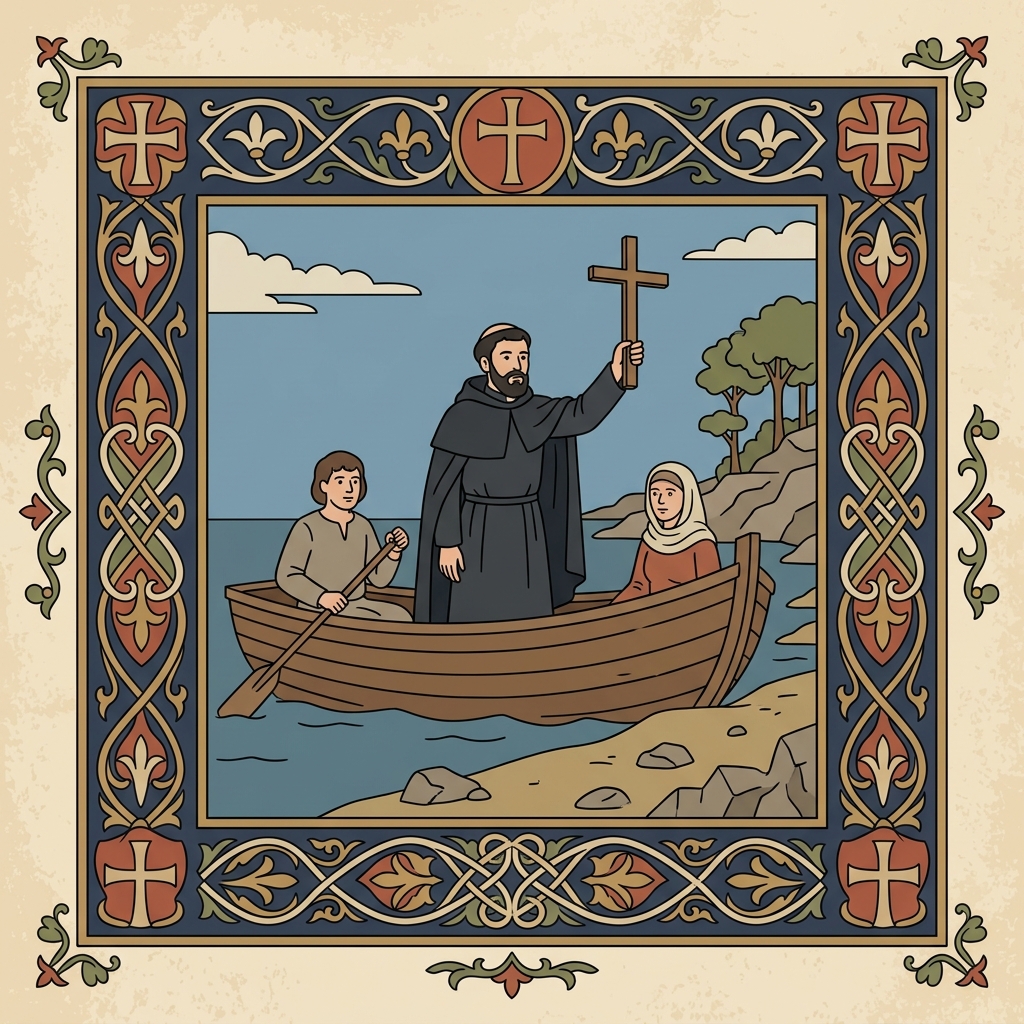
In the heart of medieval Christendom, the day was not measured by the frantic ticking of the clock, nor by the endless notifications of the modern world. It was measured by the tolling of the monastery bell. From the shadowy hours of Matins to the twilight calm of Compline, the ringing bell called the faithful to pause, to lift their eyes from the plow, the anvil, or the ledger, and to direct their hearts toward the heavens. This sacred rhythm, the pulse of the Church’s unceasing prayer, is known to us as the Liturgy of the Hours, or the Divine Office.
In our present age, time often feels like a tyrant. We are swept along by a torrent of obligations, anxieties, and distractions, leaving our spiritual lives parched and fragmented. Yet, Mother Church offers us a profound remedy, an ancient bulwark against the chaos of the world. She invites us to step into the architecture of her daily prayer, to sanctify the passing hours, and to build a cloister of peace within our own hearts.
The Architecture of Time
Just as the master stonemasons of old raised soaring vaults of limestone and stained glass to house the Eucharistic Lord, the Church provides a spiritual architecture to house our days. The Liturgy of the Hours does not require us to abandon our vocations in the world; rather, it consecrates them. By pausing at specific intervals—Morning Prayer (Lauds), Daytime Prayer, Evening Prayer (Vespers), and Night Prayer (Compline)—we weave threads of divine grace into the coarse fabric of our daily labors.
"Seven times a day I praise you for your righteous ordinances." (Psalm 119:164)
This rhythm of prayer transforms time itself. It is no longer a fleeting resource to be spent and exhausted, but a sacred vessel to be filled with praise. When we pray the Divine Office, we step out of the secular stream of time (chronos) and enter into God's sanctified time (kairos). We become sentinels upon the watchtower, joining a chorus that echoes across continents and centuries.
A Tapestry of the Psalms
At the very heart of the Liturgy of the Hours lies the Psalter—the ancient battle cry and love song of the people of God. For millennia, the Psalms have given voice to every human emotion: the deepest valleys of sorrow, the fiercest spiritual combat, and the most radiant peaks of joy. When we take up the Breviary, we are not merely reading ancient poetry; we are praying the very words that Christ Himself prayed during His earthly sojourn.
Our holy father, Saint Benedict, who structured the monastic day around the chanting of the Office, wrote in his Holy Rule:
"Let us consider how we are to behave in the presence of God and his angels, and let us stand to sing the psalms in such a way that our minds are in harmony with our voices."
In the Divine Office, the individual voice is caught up into the magnificent voice of the Bride, speaking to her Bridegroom. If you are grieving, and the appointed Psalm is one of jubilant praise, you rejoice for the sake of the Church. If you are joyful, and the Psalm is a lamentation, you weep for the suffering members of the Body of Christ. It is the ultimate prayer of spiritual solidarity.
Forging the Cloister of the Heart
Many lay Catholics harbor the misconception that the Divine Office is a fortress reserved exclusively for monks, nuns, and the ordained clergy. But the ancient traditions of the early Church always intended this treasure for all the faithful. You do not need a monastic choir stall to pray the Office; your kitchen table, your daily commute, or the quiet corner of your living room can become your sanctuary.
How does one begin to enter this noble rhythm? The secret lies in simplicity and steadfastness. One need not attempt to pray all seven hours immediately. Begin with the hinges of the day: Lauds and Vespers. Let Morning Prayer serve as the spiritual dawn, consecrating your first waking thoughts to the Almighty before the clamor of the world intrudes. Let Evening Prayer be the sacrificial incense offered at the close of day, returning the fruits of your labor to the hands of the Creator. Through the ribbons of a printed Breviary or the modern convenience of a digital application, the treasury of the Church’s prayer is more accessible than ever before.
Standing as a Sentinel
To pray the Liturgy of the Hours is to participate in the spiritual combat of our age. In the silent hours of the night, when the world slumbers or falls into sin, there is a monk in his cell, a cloistered nun in her chapel, or a father in his study, softly murmuring the Glory Be. The Divine Office is the great engine of grace that sustains the world, a ceaseless hymn of praise rising before the Throne of God like fragrant incense.
Let us, therefore, reclaim this ancient heritage. Let us allow the Liturgy of the Hours to chisel away our worldly distractions, shaping us like living stones into a temple of unceasing prayer. As we pattern our days after this sacred rhythm, we prepare our souls for the eternal liturgy of the Heavenly Jerusalem, where time shall be no more, and the praise of the Lamb will be our everlasting joy.
Reflection Question: What is one specific moment in the rhythm of your daily routine that you can claim for Christ by pausing to pray a portion of the Liturgy of the Hours?