The morning sun, heavy with the golden heat of late July, streams through the clerestory windows of Julian Vance’s workshop. Here, the air is thick with a liturgy of scents: the sharp tang of freshly planed cedar, the mellow warmth of beeswax, and the earthy base note of aging linseed oil. Julian, a master woodcarver, stands before a formidable block of English oak. With a heavy wooden mallet in his right hand and a steel gouge in his left, he strikes. The crisp thwack echoes through the high-raftered room, sending a pale curl of wood tumbling to the floor. In this humble sanctuary of sawdust and steel, the ancient Catholic tradition of sacred art is being forged anew.
The Guild of the Humble
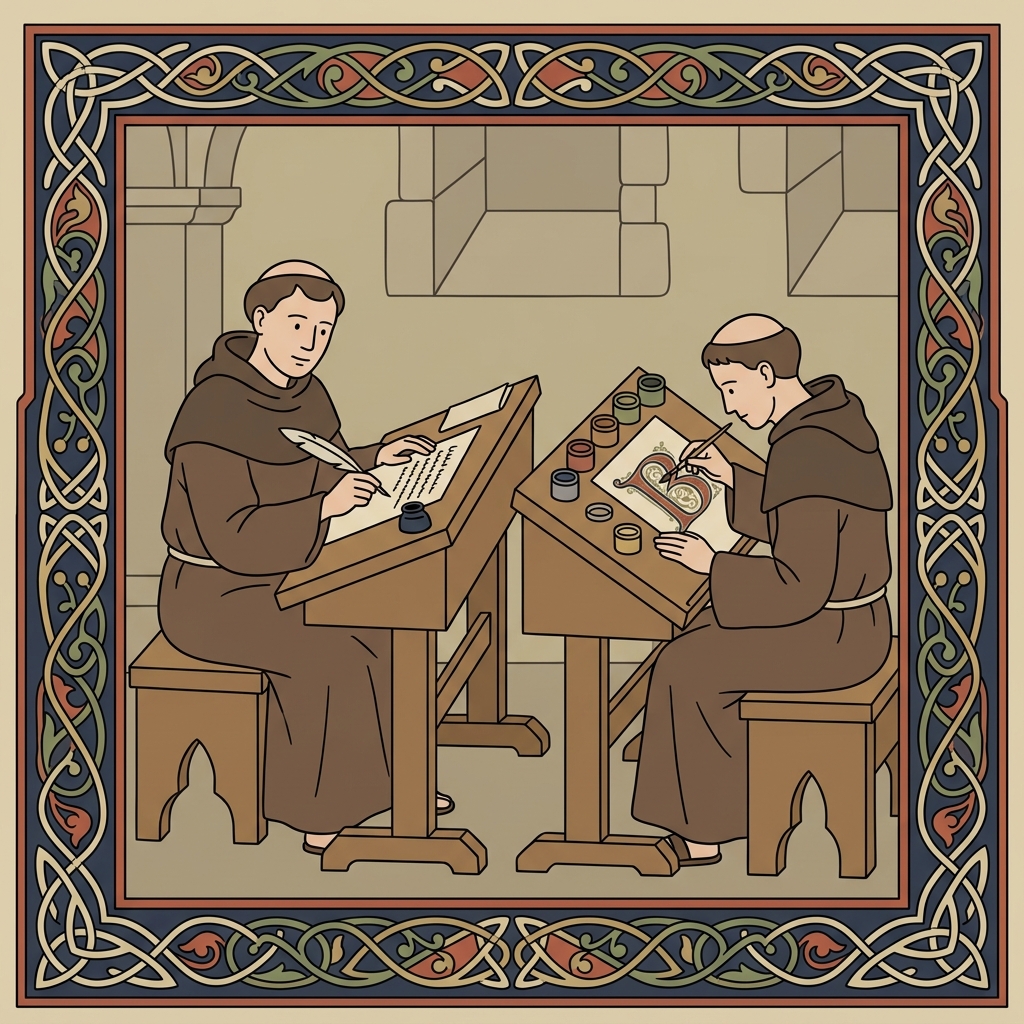
To understand the vocation of a Catholic artisan is to look back to the cobbled streets of medieval Christendom, where guilds of carvers, stonemasons, and illuminators labored not for personal fame, but for the glory of God. Their names are largely lost to history, but their prayers remain enshrined in the soaring vaults of cathedrals and the intricate rood screens of quiet parish churches. Julian sees himself as a modern inheritor of this nameless, noble lineage.
"When I step into the workshop, I am stepping into the shadow of Nazareth," Julian explains, resting his calloused hand upon the rough bark of the oak. "Christ was a tekton—a builder, a worker of wood and stone. He knew the resistance of the grain, the sweat of the brow, the necessity of patience. To work with one's hands is to participate in the very humility of God, who chose to save the world not with an army, but with hands that first learned to hold a carpenter's square."
Julian’s current commission is a life-sized processional crucifix destined for a newly founded mission parish. The corpus is being carved from a single, unblemished piece of walnut. As he works, there is no radio playing, no digital distraction—only the rhythmic, almost monastic cadence of metal slicing through timber. It is the steady heartbeat of Ora et Labora, where the work itself becomes an unceasing prayer.
Wounding the Wood
There is a profound theological paradox at the heart of woodcarving. To create an image of transcendent beauty, the artisan must first wound the wood. He must cut away, strip bare, and chisel out everything that is not the image he seeks to reveal. In Julian’s craft, the spiritual life finds a visceral, tangible metaphor.
"The wood does not yield easily," he says, running his thumb over the edge of a freshly sharpened chisel. "It resists. It has knots and burls that threaten to deflect the blade. But the master carver knows how to work with the grain, not against it. It reminds me of how the Holy Spirit works upon the human soul. We are rough, unhewn blocks, full of the knots of our own pride and sin. The Divine Artisan must chisel away our attachments. It is a painful process—this purgation—but it is the only way the image of Christ can be formed within us."
As he speaks, Julian demonstrates on the shoulder of the wooden corpus. He uses a specialized gouge to carve the deep folds of the perizoma (the cloth draped around the waist of the crucified Christ). Each strike is deliberate, practiced, and deeply reverent. He treats the timber with the utmost respect, knowing that this earthly material will soon be elevated to point souls toward heaven.
Echoes of the Incarnation
The Catholic faith is deeply incarnational. We do not worship a distant, abstract deity, but the Word made flesh. This incarnational reality gives sacred art its profound necessity. In the eighth century, St. John Damascene defended the making of sacred images against the iconoclasts, writing: "I do not worship matter, I worship the God of matter, who became matter for my sake, and deigned to inhabit matter, who worked out my salvation through matter."
For the Catholic artisan, matter is not a hindrance to the spiritual life; it is a canvas for grace. When the processional crucifix is finally complete, it will be sanded to a silken finish, oiled to draw out the rich, dark tones of the walnut, and finally painted in the traditional polychrome style to highlight the wounds of Christ. It will be carried down the center aisle of a church, preceded by incense and flanked by candles. It will hear the whispered prayers of penitents, witness the joyful vows of marriage, and stand as a sentinel of hope over funeral biers.
Julian steps back to examine the symmetry of the outstretched arms. "I am just the instrument," he murmurs, wiping a thin layer of dust from the brow of the carved Christ. "The wood comes from God's forest. The skill comes from God's grace. When the priest blesses it, it ceases to be my work and becomes a sacramental. It becomes a window to the divine."
A Return to Tangible Beauty
In a modern era dominated by the mass-produced, the synthetic, and the disposable, the work of the Catholic artisan stands as a noble sign of contradiction. It demands time. It requires sacrifice. It insists that beauty is not a luxury, but a necessity for the human soul. Workshops like Julian’s are quiet outposts of the Sanctus Mission—places where the sacred is literally being drawn out of oak and ash, reminding us that our faith is something we can see, touch, and venerate.
As the afternoon light shifts, casting long, contemplative shadows across the workshop floor, Julian lays down his mallet and brushes the sawdust from his apron. The work for the day is done, but the prayer continues.
Reflection Question: In what areas of your own life is the Divine Artisan currently chiseling away the rough edges, and how might you more willingly surrender to His shaping hand today?