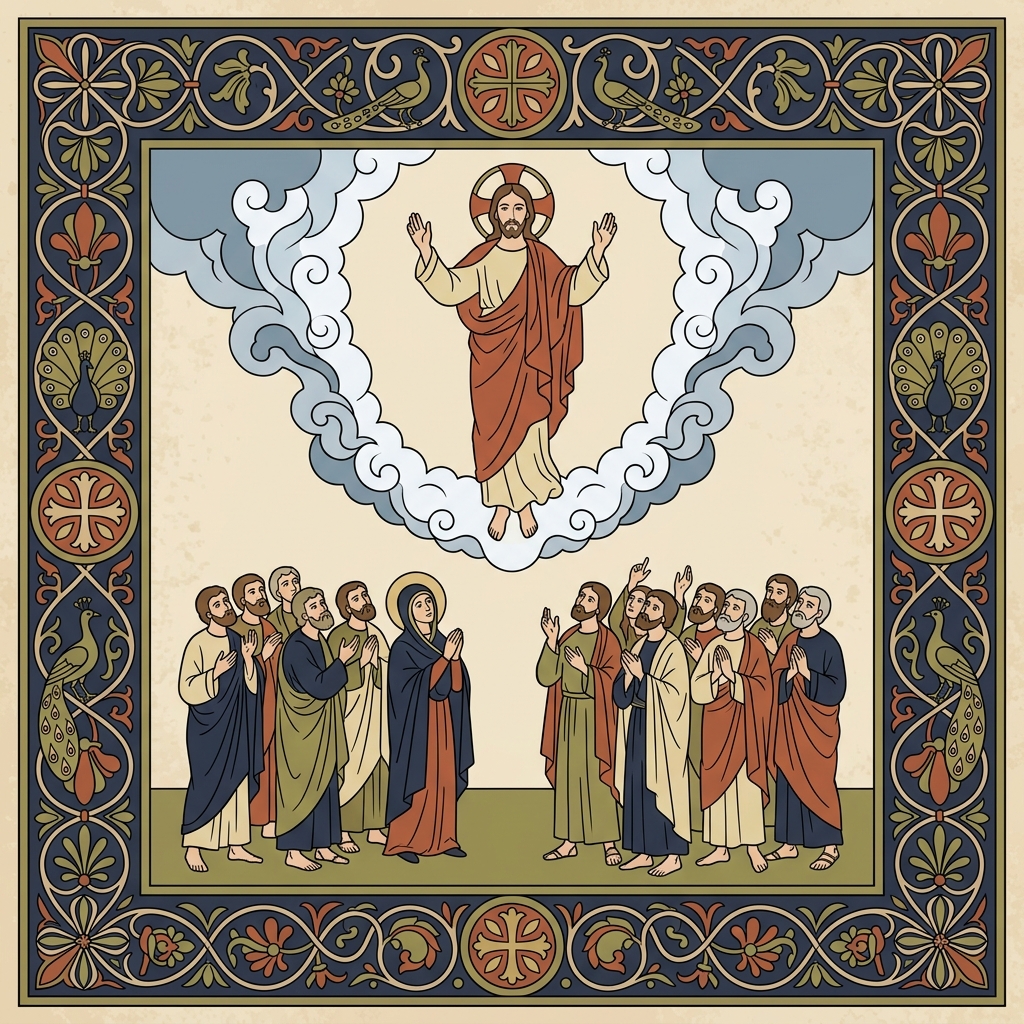
The Bread of Angels: Unveiling the Sacred Mystery of the Holy Eucharist
In the vast treasury of the Catholic faith, there is one jewel that outshines all others, a mystery so profound and central that without it, the Church herself ceases to exist. It is the Most Holy Eucharist, reverently referred to by Saint Thomas Aquinas as Panis Angelicus—the Bread of Angels. This sacred title points to a staggering reality: the food that sustains the heavenly host, the very presence of God Himself, has been given to humanity under the humble appearances of earthly bread and wine.
To fully appreciate the magnitude of this gift, we must continually strive to pierce the veil of the ordinary. The Mass is not merely a symbolic meal or a communal gathering; it is the miraculous intersection of eternity and time. When we approach the altar to receive Holy Communion, we are participating in an event of cosmic significance, receiving into our very bodies the Creator of the universe.
The Fulfillment of the Old Covenant
The Eucharist cannot be fully understood outside the context of salvation history. Throughout the Old Testament, God prepared His people for this supreme gift through a series of profound foreshadowings. When the Israelites were slaves in Egypt, it was the blood of the unblemished Passover lamb, painted on their doorposts, that saved them from the angel of death. They were commanded to eat the flesh of that lamb to complete the covenant.
Later, as they wandered through the desolate wilderness, God sustained them with manna—miraculous bread from heaven. However, as Jesus explicitly pointed out to the crowds in Capernaum, the manna was only a temporary, physical sustenance: "Your fathers ate the manna in the wilderness, and they died" (John 6:49). The manna was merely a shadow; the Eucharist is the reality. Jesus is the true Lamb of God whose sacrifice saves us from eternal death, and He is the true Bread from Heaven that imparts eternal life.
The Miracle of the Altar
The Catholic doctrine of transubstantiation is the cornerstone of our Eucharistic faith. It asserts that at the words of consecration, spoken by a validly ordained priest, the entire substance of the bread and the entire substance of the wine are changed into the Body, Blood, Soul, and Divinity of Jesus Christ. The "accidents"—the physical properties of taste, touch, smell, and appearance—remain, but the underlying reality is radically transformed.
This is a mystery that confounds the senses and challenges the rationalistic mind. It demands a profound act of faith, an intellectual surrender to the words of Christ Himself: "This is my body... This is my blood." As St. Thomas Aquinas eloquently wrote in the Tantum Ergo, "What our senses fail to fathom, let us grasp through faith's consent." We believe not because we can empirically prove it, but because He who is Truth itself has declared it to be so.
Food for the Journey
Why did God choose to remain with us in this specific, edible form? The answer lies in His profound understanding of our human nature. We are body and soul, and we require both physical and spiritual nourishment. By offering Himself as food, Christ meets us in our most fundamental human need, demonstrating that His grace is meant to permeate every fiber of our being.
The Eucharist is the Viaticum—the food for the journey. We are a pilgrim people, navigating the often treacherous terrain of a fallen world. Without spiritual sustenance, we will undoubtedly falter, succumb to temptation, and lose our way. The Bread of Angels provides the supernatural strength necessary to endure suffering, to resist the allurements of sin, and to continually grow in virtue. It heals our venial sins, fortifies our wills, and deepens our union with the Trinity.
The Call to Eucharistic Amazement
In his encyclical Ecclesia de Eucharistia, Pope St. John Paul II called for a rekindling of "Eucharistic amazement." We must never allow the frequency of the Mass to dull our sense of awe. If we truly comprehended what occurs on the altar, we would approach the sanctuary with trembling reverence. The angels, who gaze upon the face of God in heaven, fall prostrate before the tabernacle; how much more should we, mere mortals, approach with humility and profound adoration?
This amazement must translate into concrete action. It requires us to examine our consciences thoroughly before receiving Communion, ensuring we are in a state of grace. It calls for reverent posture, attentive prayer, and a deep thanksgiving after receiving the Sacrament. Furthermore, it invites us to spend time in Eucharistic Adoration, simply resting in the presence of the Lord, allowing His silent gaze to transform our hearts.
Conclusion: The Pledge of Future Glory
The Holy Eucharist is the greatest treasure entrusted to the Church. It is the living, beating heart of our faith, the source of all our strength, and the ultimate pledge of our future glory. When we receive the Bread of Angels, we receive a foretaste of the heavenly banquet, a seed of immortality planted within our mortal flesh.
At Sanctus Mission, we recognize that any true renewal of Catholic culture must be fundamentally Eucharistic. Let us continually pray for an outpouring of grace to deepen our belief in the Real Presence. Let us approach the altar with burning love and unwavering faith, knowing that in the humble white host, we hold the Creator of the universe, our Savior, and our Eucharistic King.