Where the high peaks of the Andes meet the cloudline, the wind carries a chill that penetrates to the bone. For nearly twenty years, the village of San Juan del Monte lived beneath another kind of cold: a quiet, sorrowful isolation from the sacramental life of the Church. The small stone chapel, erected by Spanish missionaries three centuries ago, had fallen into disrepair. Its wooden roof sagged beneath seasonal torrential rains, its adobe walls crumbled, and its bell—once the joyful voice of the valley—hung cracked and silent in the belfry.
Yet, the faith of the mountain villagers never vanished. Without a resident priest, the elders kept the embers of devotion alive. Each Sunday, dozens of families gathered inside the drafty, floorless sanctuary to recite the Holy Rosary by candlelight, praying that God would one day send them a shepherd and restore their altars.
An Altar Amidst the Clouds
The turn came two years ago with the arrival of Father Gabriel, a young missionary priest assigned to cover twelve remote mountain outposts across a rugged, seventy-mile territory. Upon reaching San Juan del Monte, Father Gabriel found a people hungering not only for spiritual nourishment but also for basic human sustenance. Severe droughts followed by mudslides had devastated local agriculture, leaving elderly villagers and young children vulnerable to malnutrition.
"When I first celebrated Mass here," Father Gabriel recalled, "we used a rickety wooden table beneath a leaking roof. Rain fell upon the altar linen. Yet, when I looked into the eyes of the people as I held up the Sacred Host, I saw a reverence that humbled me. They knew that despite the ruin around them, the King of Kings had descended into their midst."
Father Gabriel recognized that to rebuild the parish community, he needed to address both the altar and the bread of daily life. He envisioned a sanctuary restored to its traditional beauty, alongside a mission center that could serve as a dining hall, medical station, and catechism classroom for the surrounding hamlets.
The Nobility of Daily Bread and Sacred Beauty
Through the generous benefactor network of Sanctus Mission, help arrived in the spring. Catholic trade guilds, donors, and patrons united to fund the restoration of San Juan del Monte. The goal was not merely to construct a functional building, but to craft a place worthy of the Divine Mysteries—a beacon of sacred dignity amidst severe material poverty.
Local craftsmen worked side by side with volunteer masons to reinforce the ancient stone walls using time-tested methods. A new roof of red clay tile was constructed, framed by sturdy native timber. Inside, a beautiful, hand-carved wooden altarpiece (*retablo*) was crafted by local artisans, finished with gold leaf and adorned with icons of Our Lady of Mount Carmel and Saint Joseph.
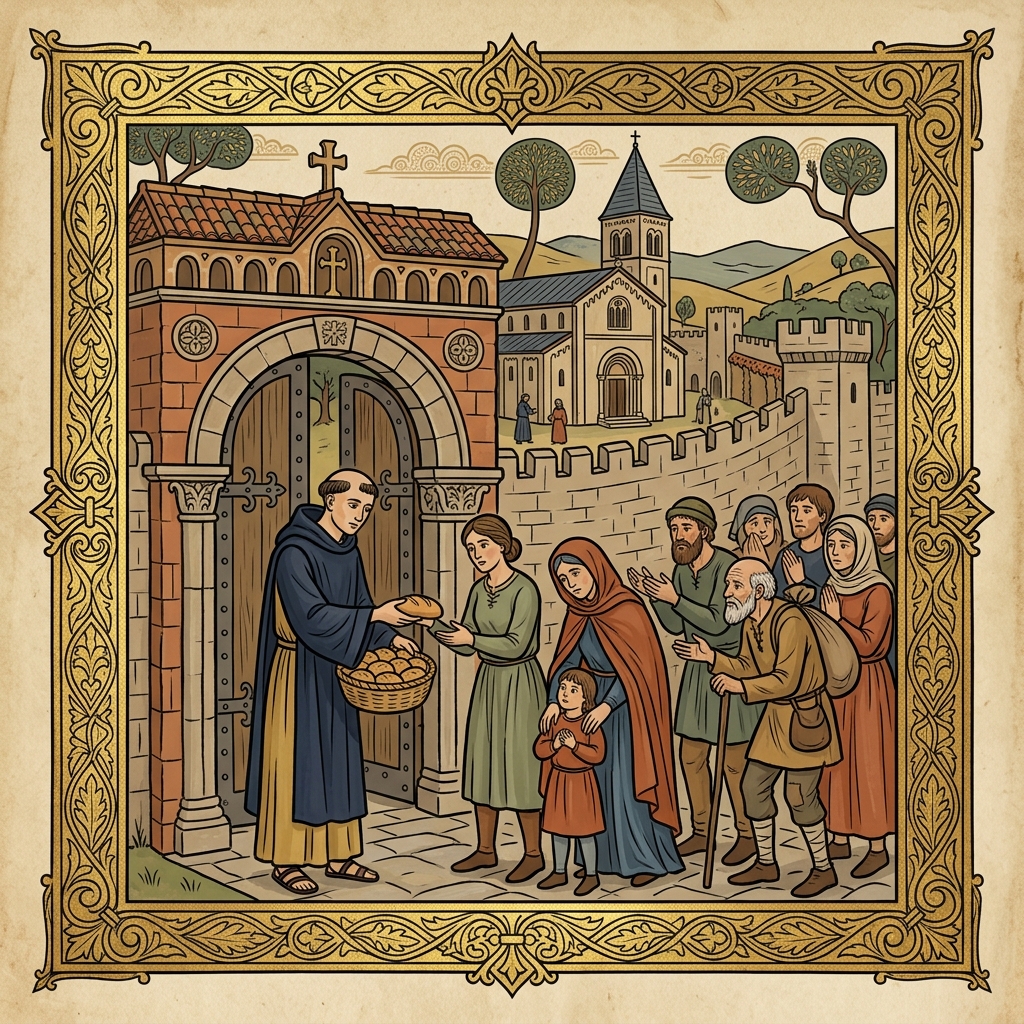
Simultaneously, the lower quarters of the mission grounds were converted into the Comedor de San José (Saint Joseph’s Dining Hall). Today, this soup kitchen provides warm, nutritious daily meals to over eighty children and elderly residents. It also serves as the hub for weekly medical clinics and catechetical instruction for youth preparing for First Holy Communion.
"To assist the poor is to erect an altar to God, whereon the sacrifices of our love are daily offered; for Christ receives what is given to His little ones."
— Saint John Chrysostom
When the Bronze Speaks Again
On a crisp morning early this October, the crowning moment of the restoration took place. A new bronze bell, cast with the inscription "Vox Domini in Virtute" ("The Voice of the Lord is in Power"), was hoisted into the restored bell tower. As Father Gabriel blessed the bell with holy water and incense, the entire village gathered in the cobblestone plaza below.
When the rope was pulled for the Angelus, the deep, resonant tone echoed across the mountain peaks for the first time in a generation. Tears streamed down the weathered faces of the village elders. Children, who had never heard the church bell ring, looked up in awe.
Today, San Juan del Monte is no longer a forgotten outpost, but a thriving sanctuary of Catholic faith and corporal charity. Mass is offered regularly, the sacraments are available to all, and no child in the valley goes to sleep without a meal. Through sacred tradition and active mercy, the light of Christ shines clearly above the clouds.
Reflection Question: How can the quiet fidelity and restored hope of this mountain mission inspire you to bring the light and beauty of Christ into the rugged, forgotten places of your own daily life?