In an age given over to the transient shadows of digital screens, the workshop of Elias Thorne stands as a sanctuary of the tangible. Here, the air is thick with the scent of soldering flux, ancient dust, and beeswax. Along the scarred wooden workbenches, shards of ruby, cobalt, and emerald glass are scattered like the jewels of a ruined crown. Elias is a glasswright—a master of the medieval craft of stained glass—and his vocation is one of profound theological weight: he builds windows that allow the light of heaven to teach the hearts of men.
The Theology of Illumination
To enter a Gothic cathedral is to step into a jewel box of divine revelation. The medieval mind understood that light was the purest physical metaphor for God’s grace. Abbot Suger of Saint-Denis, the twelfth-century father of Gothic architecture, once inscribed upon his abbey doors: "The dull mind rises to truth through that which is material, and, in seeing this light, is resurrected from its former submersion."
Elias sees his daily labor through this very lens. "We do not merely make pretty windows," he explains, pausing to wipe a smudge of charcoal from his brow. "We are creating a medium for the Incarnation. A stained-glass window is entirely dead until the sun rises and strikes it. In the same way, theology is just black ink on a page, and our souls are just dormant vessels, until the illuminating grace of Christ shines through them."
The Discipline of the Lead
The beauty of a stained-glass window depends as much upon the dark, rigid lines of lead as it does upon the brilliant colors of the glass. The process of "glazing" involves cutting pieces of glass to exact shapes and binding them together with strips of lead came, which are then soldered at the joints.
There is a deep asceticism in this structure. "People today want the color without the lead," Elias muses, his hands deftly scoring a sheet of sapphire glass with a diamond-tipped cutter. "They want the joy, the ecstasy, and the beauty of the faith without the dogmas, the rules, or the cross. But without the dark, heavy lines of the lead, the glass cannot hold its shape. It would simply shatter and fall from the frame. The lead is like the commandments of God and the structures of His Church—they seem heavy, but they are exactly what allows the beautiful colors of a virtuous life to hold together against the howling winds of the world."
The Crucible of the Kiln
Before the glass can be bound in lead, it must often be painted to add the delicate details of a saint’s face, the folds of a garment, or the feathers of an angel’s wing. Elias uses vitreous paints made from ground glass and metallic oxides. But painting the glass is only the beginning. The pigment must be fused to the glass in a kiln, heated to over twelve hundred degrees Fahrenheit.
"The kiln is my daily reminder of Purgatory and the purgative way," Elias says with a reverent smile. "I can paint the most beautiful face of the Blessed Virgin, but if I do not subject it to the fire, the first rainstorm will wash the paint away. The glass must endure the furnace for the image to become permanent."
How true this is of the spiritual life. We may possess good intentions and surface-level devotions, but it is the crucible of suffering, trial, and patient endurance that permanently fires the image of Christ into our souls. Only after passing through the fire can the glass withstand the elements and stand triumphant in the sanctuary.
Golden Words in Glass
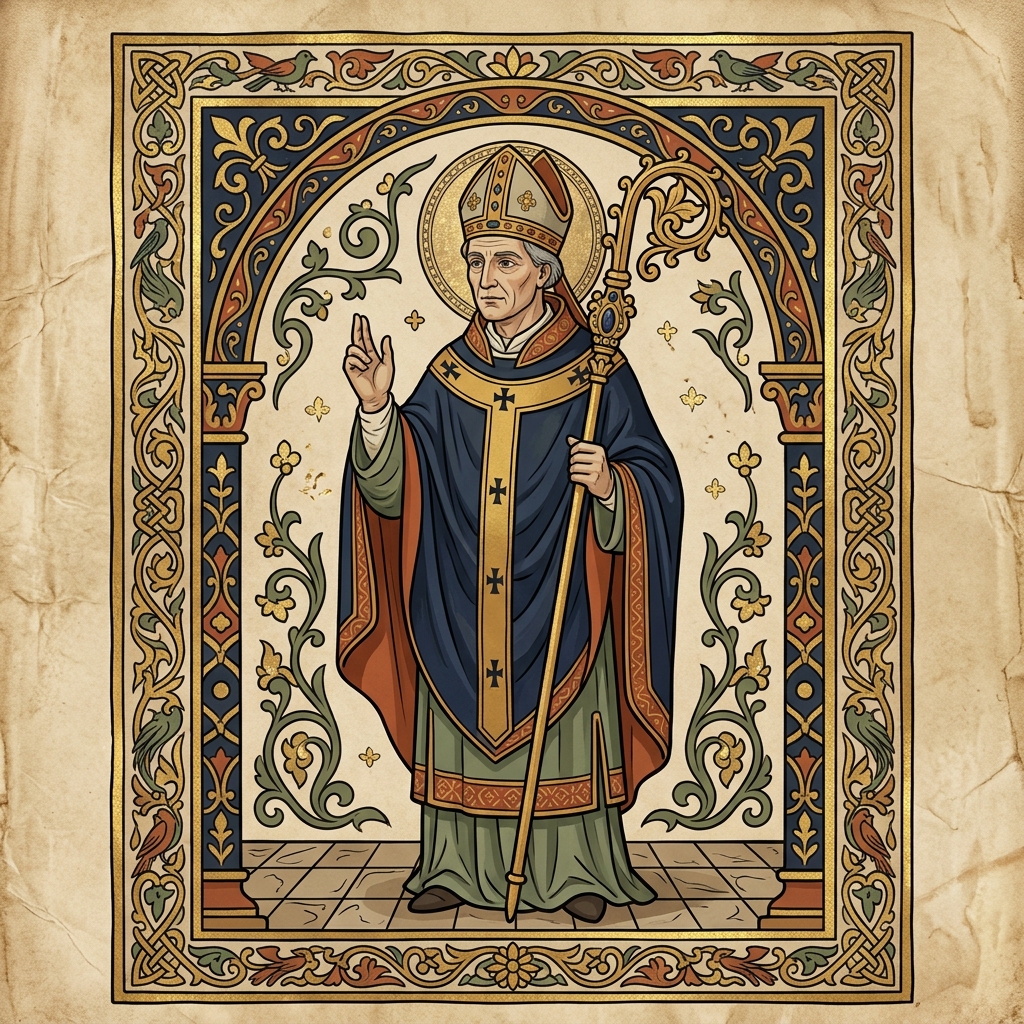
Today, as the summer sun blazes on this late July morning, Elias is fitting the final pieces of a magnificent window destined for a newly restored parish in the mountains. It is fitting that today is July 30, the memorial of Saint Peter Chrysologus, the fifth-century Doctor of the Church known as the "Golden-Worded." The window Elias is completing depicts this very saint, holding a Book of the Gospels from which literal rays of amber glass emanate.
"Saint Peter Chrysologus preached with such clarity that his words brought the warmth of truth to a world darkened by heresy," Elias notes, carefully soldering a joint near the saint's halo. "My hope is that when the morning sun hits this amber glass, the parishioners will feel the physical warmth of that same eternal truth upon their faces during the Holy Sacrifice of the Mass."
In the hands of an artisan like Elias Thorne, shattered fragments of earth are redeemed, bound together, and lifted up to the heavens. It is a quiet, hidden labor, fraught with the danger of cuts and burns, yet it produces a legacy that will outlast its maker by centuries.
A Reflection for the Journey
The craft of the glasswright is a mirror of the soul's journey toward sanctification. The Divine Artisan desires to take the fragmented, broken, and sharp pieces of our lives and assemble them into a masterpiece of grace. As you consider the shattered pieces of your own history—your sorrows, your joys, your failures, and your victories—how might God be binding them together with the strong lead of His Church, that His eternal light might finally shine through your wounds?