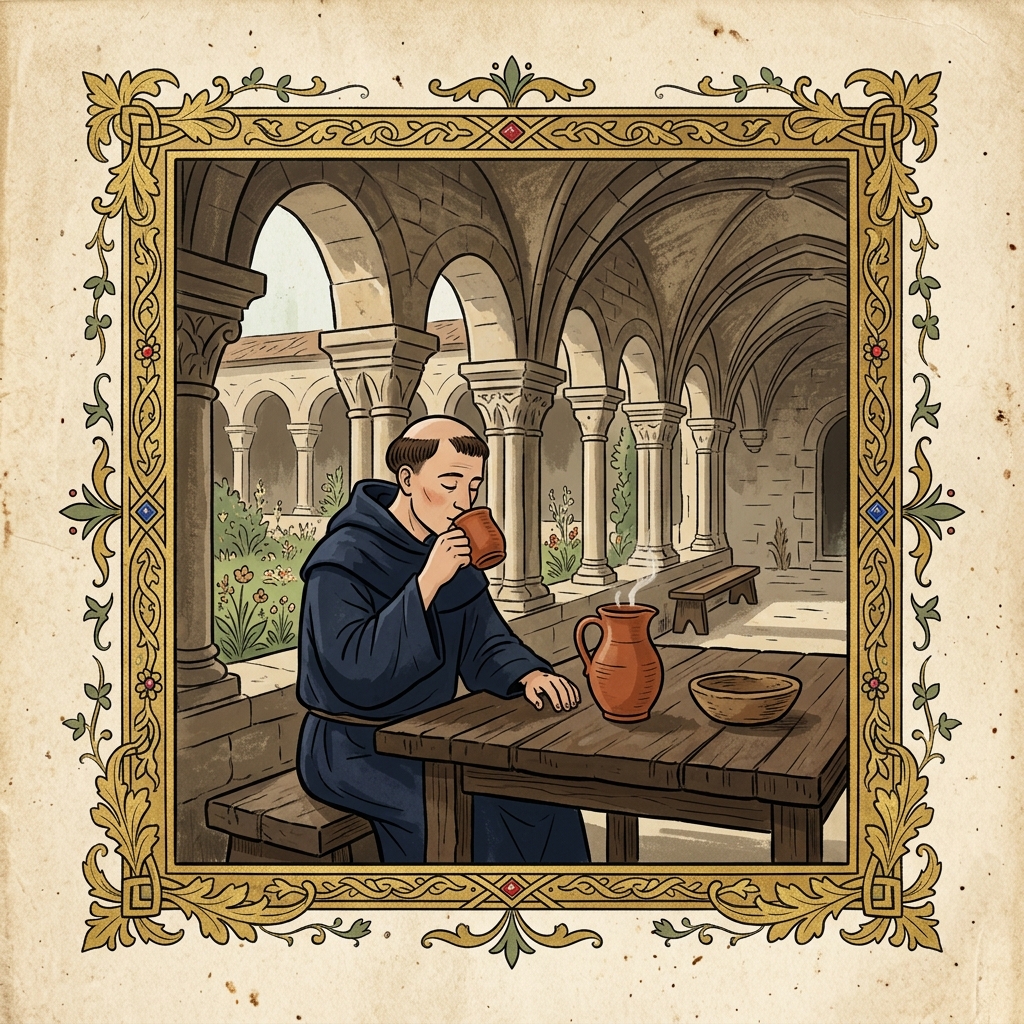
The modern world moves at the speed of a fiber-optic pulse, driven by a relentless appetite for the immediate and the ephemeral. Yet, tucked away in a stone-walled workshop at the edge of the Appalachian foothills, time operates under a different sovereignty. Here, the air is thick with the scent of beeswax, cured leather, and the sharp, earthy tang of crushed oak galls. In this quiet sanctuary, a Catholic artisan named Julian Vance labors over a slanted oak desk, breathing life into a craft that has sustained the Church’s memory for millennia.
Today is Thursday, June 4, the Feast of Corpus Christi. While parishes around the world prepare their monstrances and canopies for Eucharistic processions, Julian is preparing a procession of his own upon a pristine sheet of calfskin vellum. He is illuminating St. Thomas Aquinas’s masterful sequence, the Lauda Sion Salvatorem. With a steady hand, a breath held in reverence, and a heart tethered to the rhythmic chants of the ancient Church, Julian reminds us that true art is merely a vessel for the Divine.
The Alchemy of Earth and Word
To understand the work of an illuminator is to understand the deeply incarnational theology of the Catholic faith. God did not abhor the virgin's womb, nor did He shun the dust of the earth; He took on human flesh to redeem it. Julian approaches his materials with this same incarnational reverence. He does not order mass-produced paints; he forges them.
"To write the Word of God, one must gather the groans of creation and lay them at the foot of the Cross," Julian explains, adjusting his spectacles as he grinds azurite into a fine, celestial blue powder. "My black ink is born of oak galls—tumors formed on ancient oak trees by wasps. We take this symbol of disease and corruption, crush it, mix it with iron salts and wine, and it becomes the incorruptible ink used to transcribe the Holy Gospels. It is a profound mystery of redemption hidden in the chemistry of the forest."
The manuscript before him is a symphony of these redeemed earthly elements. The vellum, a testament to the sacrifice of the beast, provides a resilient, luminous surface. The quills, harvested from the molted feathers of geese, are meticulously carved to a razor edge, becoming instruments of grace. Every stroke is a deliberate, unhurried act of will—a physical manifestation of the monastic principle of ora et labora (pray and work).
Gilding the Mystery
As the midday sun strikes the diamond-paned window of the scriptorium, Julian reaches for a small, leather-bound cushion holding fragile sheets of 23-karat gold leaf. He is preparing to illuminate the first letter of the hymn's most triumphant stanza: Ecce panis Angelorum (Behold the Bread of Angels). This is the apex of the illuminator's art.
He carefully applies a base of glair—a tacky substance derived from whipped egg whites—and breathes lightly onto the parchment to activate its moisture. With a specialized squirrel-hair brush, he lifts the gossamer-thin gold and lays it over the letter. Once it has adhered, he burnishes it with a smooth agate stone until it shines like a polished mirror.
"The gold does not merely decorate; it signifies," Julian notes, his eyes fixed on the brilliant reflection. "In medieval aesthetics, gold was understood to represent the uncreated light of God. When a believer gazes upon an illuminated manuscript by candlelight, the gold flashes and dances. It is not static. It is alive, much like the True Presence of Christ in the Eucharist. When I lay the gold upon the vellum, I am making a tabernacle for the text."
The Liturgy of Attention
The physical toll of this sacred craft is immense. Hours of hunching over a desk yield cramped fingers, strained eyes, and an aching back. Yet, Julian embraces this discomfort as a form of bodily asceticism, a mortification united to the suffering of Christ. In an era that idolizes comfort and convenience, the slow, agonizingly precise work of the scriptorium is a rebellion of reverence.
He finds solace in the words of Cassiodorus, the sixth-century monk who championed the vocation of the scribe: "Every word of the Lord written by the scribe is a wound inflicted on Satan."
"We live in a throwaway culture," Julian reflects, wiping his quill clean. "We consume content and discard it seconds later. But sacred art demands something more of us. It demands our attention. It demands our stillness. When I spend three weeks crafting a single page of a missal, I am creating an heirloom of faith that will outlast me. I am whispering to the generations of Catholics yet unborn that our Lord in the Blessed Sacrament is worthy of our time, our finest materials, and our supreme devotion."
A Procession in Ink
As the afternoon wanes and the church bells in the distant valley ring the hour of Vespers, Julian lays down his burnisher. The page is complete. The Lauda Sion radiates from the vellum, bound in celestial blues, deep crimsons, and the blinding light of burnished gold. It is a visual echo of the Eucharistic procession—a triumphant march of truth and beauty through a world parched for meaning.
Through the silent, noble work of artisans like Julian Vance, the medieval spirit of the Church is not merely preserved as a museum piece; it is kept vibrantly alive. His illuminated pages serve as windows into eternity, inviting the modern soul to pause, to look, and ultimately, to adore.
Reflection Question: As we celebrate the Real Presence of Christ in the Eucharist today, consider the "work of your hands." How can you imbue your daily labor, however ordinary, with a greater reverence and attention to the glory of God?